


This week on the blog, we bring you the answer to a question that you ask us very often … Why is it important to vitrify eggs? We wanted him to be the Dr. José Landeras, director of IVI Murcia, whoever answers this question and tells us about it in this post.

The vitrification has completely changed the assisted reproduction of the 21st century, making possible two important challenges, the preservation of female fertility and the elective transfer of a single embryo.
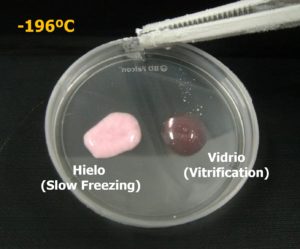
The main characteristic of the vitrification technique is that no water crystals are generated (as with slow freezing). And this is due, on the one hand, to working with a minimum volume of liquid medium and, on the other, to direct immersion in liquid nitrogen (-196ºC). Through this immersion, the temperature drops very rapidly, at a rate of 23,000 ° C / min.
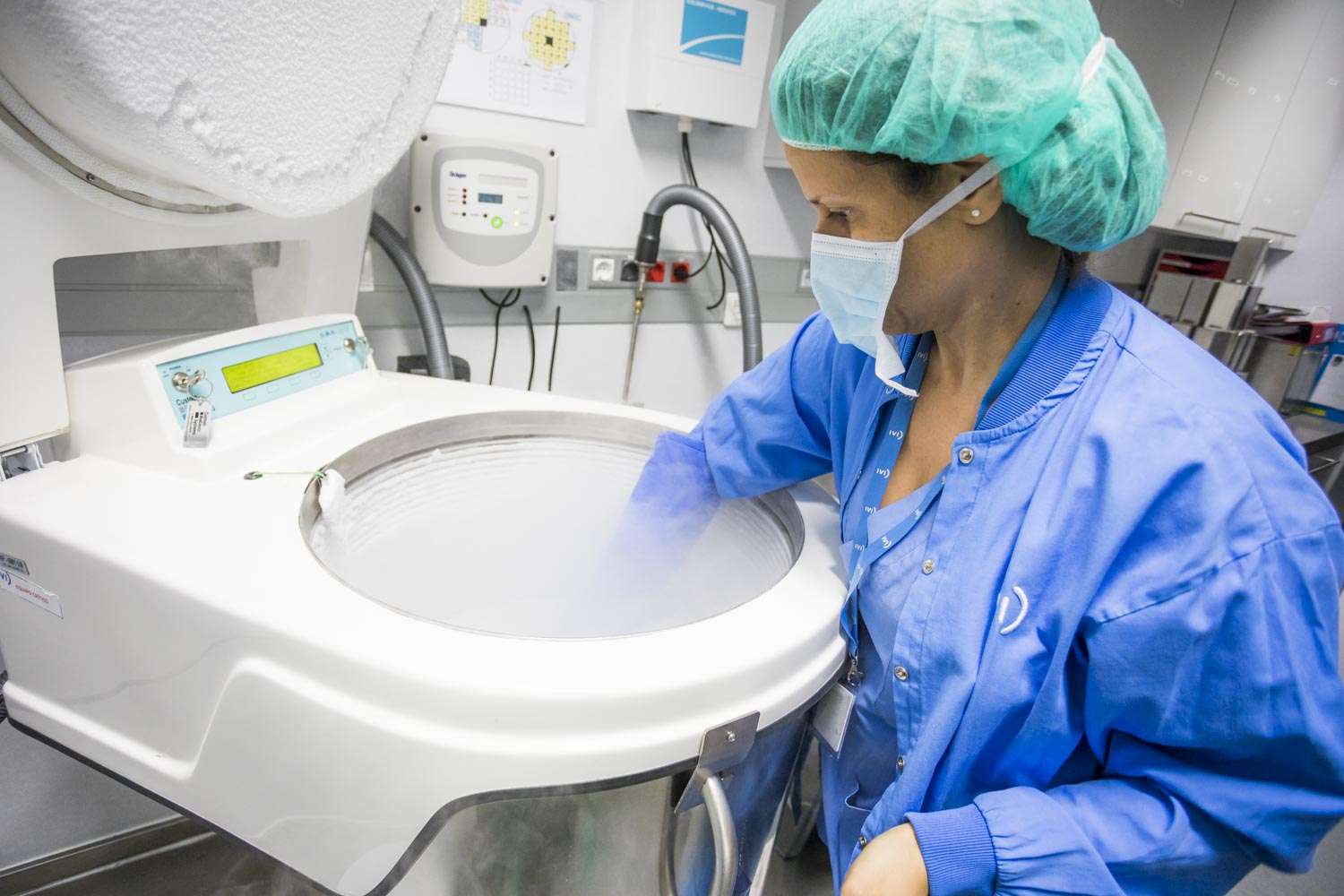
All this made it possible to freeze both oocytes and embryos with a very high survival rate after thawing, and practically preserving 100% of their reproductive capacity. You can see how the vitrification process works in the following video:
The social revolution of being able to choose the moment to be a mother thanks to preservation of your fertility, is compared with the revolution that was, at the time, the development of oral contraceptives for birth control.
It must be taken into account that this situation of postponing the search for motherhood due to professional development, due to difficulties in being able to reconcile the personal and professional facet or for purely economic reasons is increasingly frequent in our environment. And, in this sense, the Egg freezing has made it possible for women to consider the search for motherhood with greater flexibility.
Ideally, a sufficient number of oocytes should be vitrified (8-15). But how do we obtain them? First, an ovarian stimulation with gonadotropins takes place and, finally, an ovarian puncture vaginally and with ultrasound control. Preservation of fertility must be cost / efficient, and for this, should be performed at an age with a good prognosis in terms of oocyte quality (30-36 years).
The main objective is to preserve these ovules from the negative effect of the passage of time in order to be able to use them later, considering that reproductive problems will frequently appear as a consequence of the advancement of chronological age in women; especially from 38-40 years. In this way, you can prolong your fertile capacity over time, being able to later gestate with their own genetic makeup, in an age range in which many women who have not taken this precaution will have to face the indication of the egg donation as a consequence of the loss of quantity, and above all, quality of their eggs.
Transfer a single embryo
The second important challenge in which the development of vitrification has contributed decisively has been the elective transfer of a single embryo. With this, the fight against multiple pregnancy and its complications, which is inevitably related to assisted reproduction.
As with ovules, this technique of embryo freezing It implied a very important improvement in the survival rates of the embryos to thawing, as well as the preservation of all their reproductive potential regardless of the time they remain frozen until their use.
The most frequent situation will be freezing surplus embryos in an in vitro fertilization (IVF) procedure. In general, in these treatments, we will generate more than one embryo, and after transferring one of them fresh, we will proceed to freeze the rest of the embryos with the peace of mind of knowing that they will maintain all their implantation capacity.
Another increasingly frequent situation is the of having to avoid the transfer of fresh embryos. In this case, we will freeze all the embryos generated (freeze all) with the intention of transferring them later in time. It is what we know as deferred transfer.
Vitrification and COVID19
The medical indication may be to avoid transferring the fresh embryo in some situations where your implantation capacity is clearly diminished (pre-transfer uterine bleeding, inadequate hormone levels, etc.); can be avoid transferring fresh in situations in which gestating at that time could entail some risk to the woman’s health (risk of developing ovarian hyperstimulation syndrome), or avoid fresh transfer with reasonable health concerns.
The latter is what happened with the current COVID-19 pandemic, when we had to freeze all the embryos from several cycles of IVF treatments that were already underway when the Health Authorities recommended to interrupt the activity. However, since April 27 – after the Ministry of Health published in a resolution that assisted human reproduction centers and services are authorized to operate – we have reopened and we are gradually returning to normality, without pause but without haste and, above all, with great enthusiasm to continue helping you have a baby
And, to conclude, I wanted to recall again the great importance of the SOLIDARITY to overcome this COVID-19 crisis.
Dr. Jose Landeras
Gynecologist and Director of IVI Murcia


