


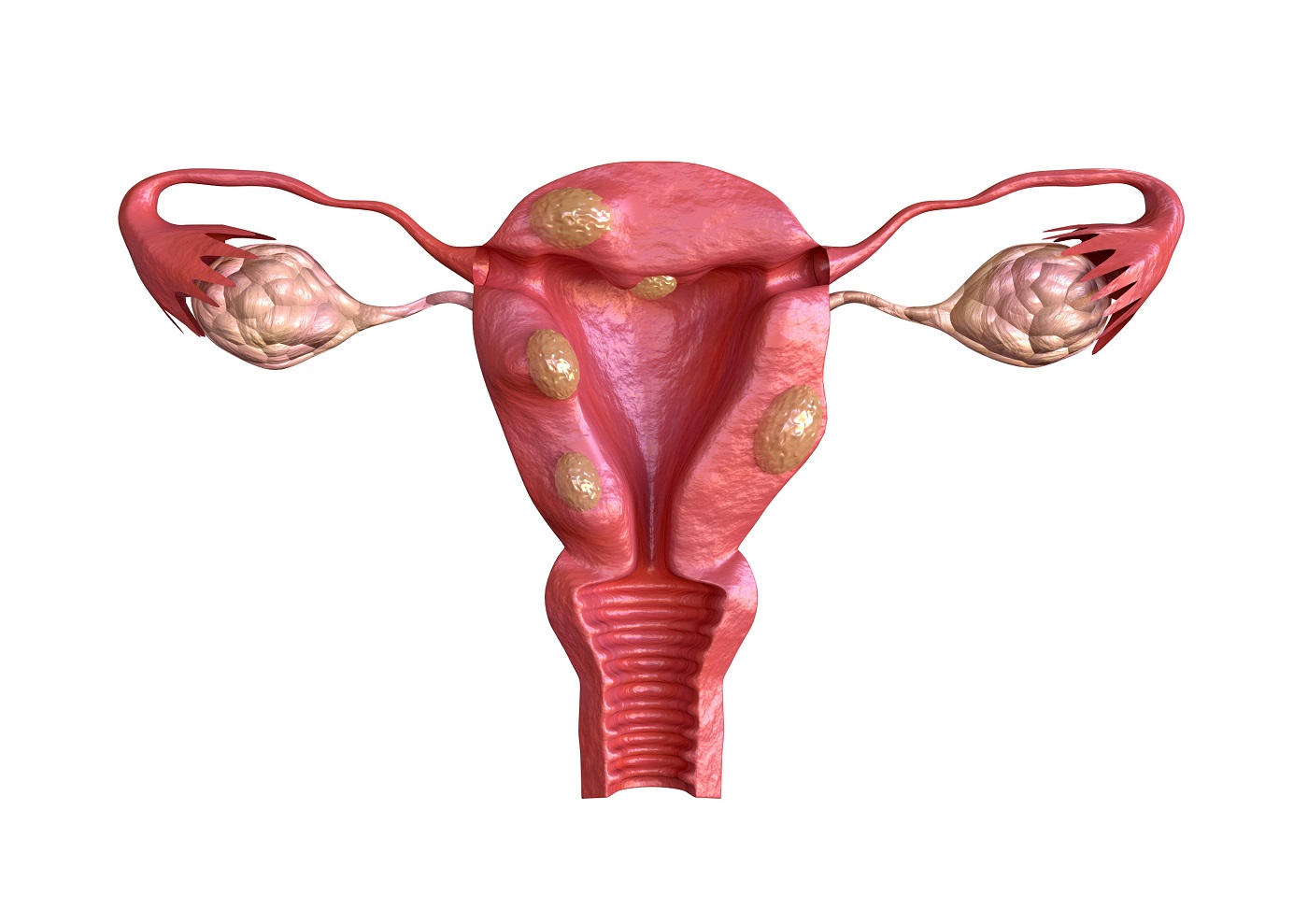
70% of women of childbearing age can develop fibroids in their lifetime. They are the most common benign female tumors. Although most do not have symptoms, 25% can cause excessively heavy or prolonged menstruation (menorrhagia), pressure, discomfort during sexual intercourse, secondary dysmenorrhea (acute pain in the lower abdomen that is heavier and more continuous than in the primary) or pelvic pain
In addition, fibroids affect fertility, causing a higher risk of miscarriages and difficulties in obtaining a natural pregnancy. That is why IVI dedicates part of its research work to the treatment of these tumors, since they can directly affect women’s desire to have a child.
Other conservative treatments for uterine fibroids
In recent years, many efforts have been devoted to the treatment of fibroids, so that women who wish to maintain their fertility can preserve the uterus. We are talking about conservative treatments, such as uterine artery embolization, high-intensity focused ultrasound, and radiofrequency myolysis. Thus, it is explained by Dr. María Cerrillo, gynecologist at IVI Madrid and specialist in the treatment of uterine fibroids.
“Myolysis, in particular, was introduced in the late 1980s in Europe and refers to the destruction of uterine fibroids by focused thermal energy. It is a conservative treatment for uterine fibroids that has evolved over the years to become an effective and safe method in the treatment of uterine fibroids, without leaving scars and allowing the conservation of the uterus ”.
IVI studies alternatives for the treatment of fibroids
With the aim of offering more alternatives to women with fertility problems, IVI has carried out a study to evaluate the safety and feasibility of the transvaginal radiofrequency myolysis guided by ultrasound in the treatment of uterine fibroids in this type of patients. The conclusion is that, with this minimally invasive technique, patients could resume their normal life the next day. This is because it is performed as an outpatient procedure that does not require general anesthesia, additional laparoscopic procedures, or hospital admission.
“In our study we propose to study the results of the radiofrequency myolysis technique in patients with fertility problems with a very specific profile of fibroids. They are those that due to their location and size are not easily approachable by surgery – either hysteroscopic or laparoscopic. However, they compromise the endometrial cavity, displacing the endometrium. This type of fibroids, type 2 and type 3 intramural, measure less than 4 cm and deform the uterine cavity, affecting implantation and increasing abortion rates ”, explains Dr. Cerrillo.
In the studies carried out by IVI to date for the treatment of fibroids using radiofrequency, symptomatic patients have been selected. These are generally women who present with metrorrhagia, uterine bleeding outside the menstrual period, and patients with fertility problems have been excluded.
Radio frequency: a simple process
The treatment on which IVI has carried out these studies is simple. It is performed vaginally and consists of necrotize the tissue through a fine needle that applies heat inside the fibroid. This necrotic tissue is reabsorbed, which reduces the volume of the fibroid and therefore the symptoms that derive from it.
With this technique the endometrium is not damaged and postoperative is not required. In addition, the patient can seek pregnancy within a few months of treatment.
“We have verified how the reduction in the volume of the myoma is striking at the third month of treatment. It reaches almost 50% and is even higher at 6 and 9 months, which encourages us to think that these women can undergo reproductive treatment soon, ”says Dr. Cerrillo.


