


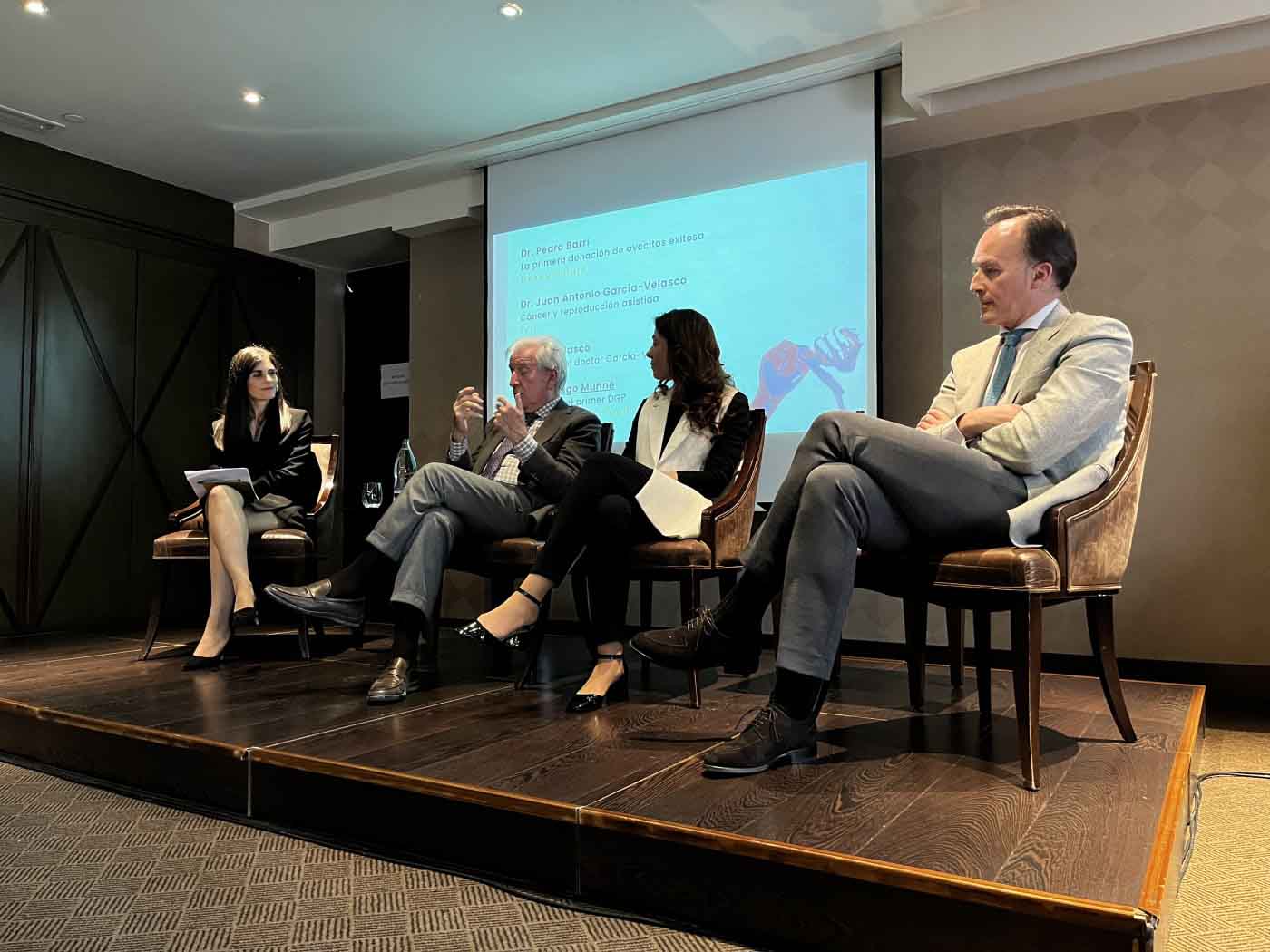
A few days ago the Spring Meeting of Fertility Europe, the federation of infertility patient associations in Europe. This event, which takes place every year, has had Madrid as the setting for this edition, on the occasion of the 40th anniversary of the first IVF in Spain. As organizers, how could it be otherwise, the Association of Patients National Infertile Network -the most important in our country-. From IVI we have been present at this meeting, as leaders in assisted reproduction both nationally and worldwide, with speakers of the highest level.
Make infertility visible
And it is that from the National Infertile Network Association they work hard every day to make infertility visible and raise awareness about the disease. Because yes, infertility is a disease and the WHO says so. In addition, proof of this is the collaboration that we carried out a few weeks ago for the launch of ‘The Language of Fertility: Breaking taboos’. A manifesto addressed to society -especially to health groups and the media, and to the environment of patients- to re-educate in the way we have to treat infertility and motherhood through assisted reproduction.
Within the framework of awareness and dissemination of the association, they have organized this year’s edition of the Spring Meeting, whose opening ceremony took place yesterday and which reviewed the last four decades of reproductive medicine in Spain.
40 years of the first IVF in Spain
This annual international event for infertility patients has wanted to commemorate 40 years since the first In Vitro Fertilization was carried out in Spain. A treatment that culminated, 37 weeks later, in the birth of Victoria Anna, the first Spanish baby born as a result of assisted reproductive techniques. It should be noted that this event should have been held in 2020, but the COVID-19 pandemic prevented it.
Major milestones in Assisted Reproduction
Thus, Dr. Juan Antonio García Velasco, scientific director of IVIRMA Global and co-director of IVI Madrid, participated in the presentation on reproductive milestones, together with Dr. Pedro Barri –author of the first pregnancy with donated eggs in Spain-. Specifically, Dr. García Velasco was able to provide interesting information on the relationship between cancer and assisted reproduction, in this review of some milestones in reproductive medicine.
«Dr. Ana Cobo started the path of oocyte vitrification. From there we were able to start working on processes such as, for example, the preservation of fertility in cancer patients. Oocyte vitrification allows us to manage the times, allows us to postpone motherhood in case of cancer treatment or for a social desire, that is, when you want to be a mother but not now. It allows us to avoid complications that existed a few years ago, because we can vitrify very effectively”explained Dr. García Velasco at the event.
In addition, at the event we have had the presence of Esther Velasco, a cancer patient of Dr. García Velasco.
«One of the things that they told me that I was not going to be able to do, as a result of the cancer diagnosis, was to be a mother. At first I didn’t think about it, but after a while I really did want to be a mother and I found out what options I had. It was my illusion, I wanted to do it and both my hematologist and Dr. García Velasco believed that there was a possibility and I clung to it”Esther shared at the event.
The future of assisted reproduction
Finally, a look has been taken at what is coming in the field of reproductive medicine. From IVI we have been able to participate with the presentation by Dr. sonia herraizresearcher of the IVI Foundation, with a presentation focused on ovarian rejuvenation and its importance in the future of assisted reproduction. And it is that for us it is already a reality in our clinics. In 2021 we created the first Center of Excellence in Ovarian Rejuvenation in the world. These techniques, of which we are pioneers, offer the possibility of being a mother with their own ovules to women who otherwise could not.
«Events like this are an opportunity, as researchers, to meet the patients, tell them what we are investigating in order to offer them better techniques and treatments to achieve their reproductive desire. In this sense, the treatments that we have been defining in terms of ovarian rejuvenation, based on studies that demonstrated the existence of sleeping follicles in ovaries that have lost the ability to ovulate and that can be reactivated to offer an option to patients who, up to that point, moment they only had egg donation as an alternative to being mothers. Because the delay in the childbearing age has allowed us to know the magnitude of the passage of time in fertility”explained Dr. Sonia Herraiz.


