


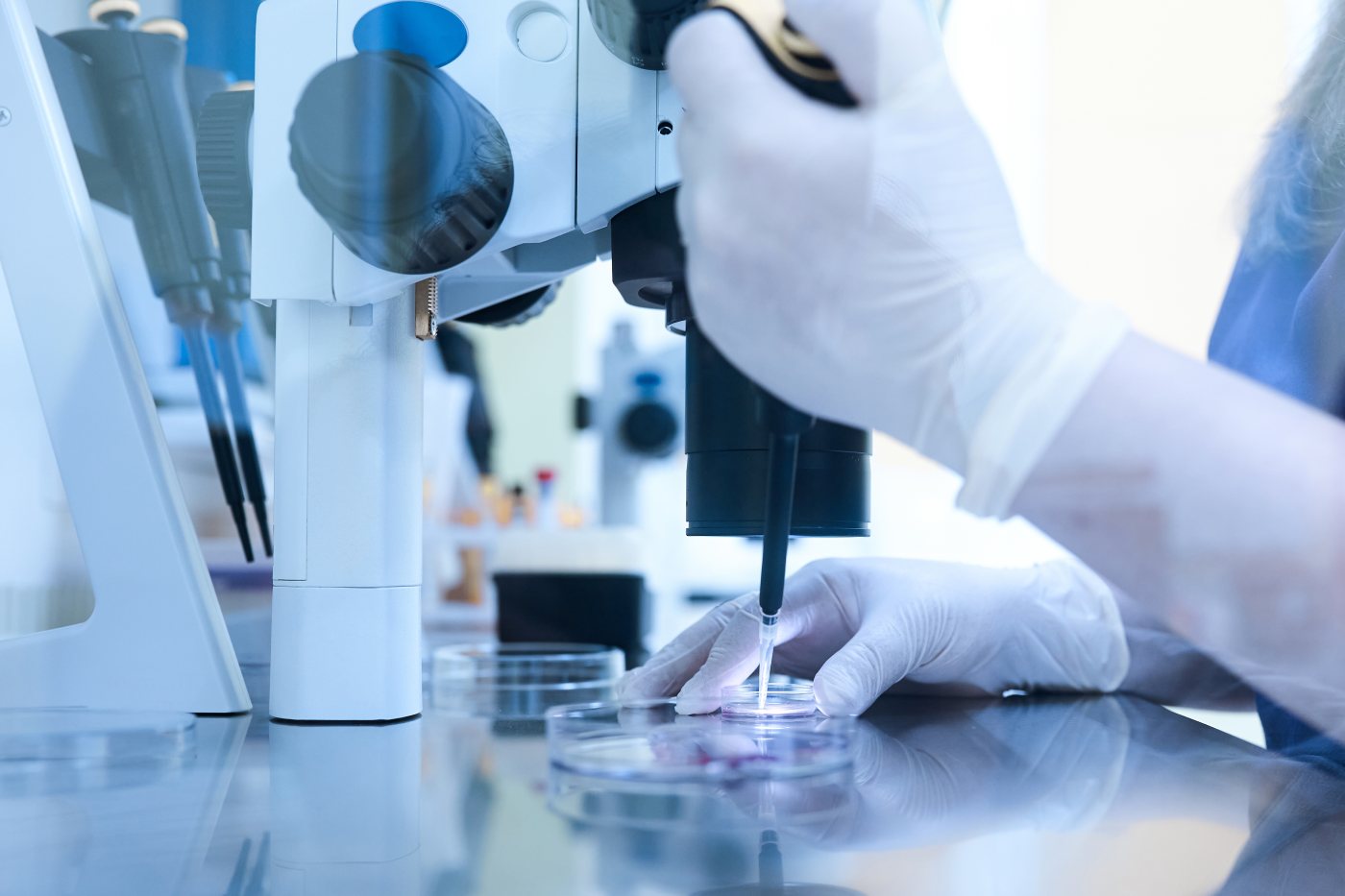
What if tissues and organs could be created in the future, which can be used for human transplants? The latest findings in reproductive medicine may be the key that makes them possible and this was presented last Saturday at the 10th IVIRMA Congress, held in Malaga.
How is it possible to have artificial embryos?
A team of researchers, led by Dr. Jacob Hanna, from the Weizmann Institute of Science’s Department of Molecular Genetics, has been able to create synthetic mouse cells without developmental restrictions. With this, they were able to discover a potential for embryonic and extra-embryonic development on platforms that recreated an electronically controlled uterus, thereby generating complete embryos with organs.
As a result, they obtained a synthetic mouse embryo model with progenitor or specialized cells with a beating heart, a brain with well-formed folds, a yolk sac, a neural tube, an intestinal tract, a placenta, and an incipient blood circulation. And all this in just eight days of development, compared to the 20 days of gestation that are necessary in the case of mice.
“The embryo is the perfect starting point for generating organs and the best 3D bioprinter, and that is the key to being able to create mechanisms that allow us to make stem cells differentiate from specialized cells in the body or directly form entire organs. This has been very difficult up to now, and to achieve it, it has been key to unlocking the potential for self-organizing coding of stem cells”explains Dr. Hanna, associate professor at the Weizmann Institute of Science.
95% similarity with natural embryos
How has it been possible? The starting point was the advances previously achieved in his laboratory, such as the reprogramming of stem cells to later return them to the earliest stage. For this, they also had a device that fulfilled the role of the uterus, in order to cultivate mouse embryos (natural, in this previous investigation) through the use of a solution with nutrients, in vessels in continuous movement. In this scenario, the process in which nutrients are distributed throughout the blood flow to the placenta was recreated, maintaining strict control over oxygen exchange and atmospheric pressure.
In this new study, Dr. Hanna’s team set out to cultivate a synthetic embryo model starting solely from mouse stem cells, grown for previous years in a Petri dish, dispensing with the need to start with a fertilized egg. .
Before placing these cells in the device outside the uterine environment, they were classified into 3 groups: one in which they were left as is and others were pretreated to give rise to extraembryonic tissues. By putting them together in this device, 0.5% of them created spheres that gave rise to structures similar to an embryo. From this, the researchers clearly saw both the placenta and yolk sacs being formed outside of the embryos and the development of the synthetic model as in a natural embryo.
“When compared with natural mouse embryos, the synthetic models showed 95% similarity both in the shape of the internal structures and in the gene expression patterns of the different cell types. The organs observed in the models gave every indication of being functional.says Dr. Hanna.
Advances with a future perspective in transplants
The next long-term objective is to analyze how stem cells create different organs in the developing embryo, which will allow broadening horizons in therapeutics with the perspective of organ transplantation. With this, tissue and organ culture through the use of synthetic embryonic models may one day be likely.
But, for this, it is necessary to understand the mechanisms of reprogramming and differentiation, by observing the transformations of stem cells in the processes of embryogenesis and organogenesis. In addition to analyzing the level of equivalence of cells in vitro with those in vivo.
Keys for research
On the other hand, Dr. Hanna’s project could help to simplify the ethical debate around experimentation with natural embryos and to minimize laboratory animal tests. And it is that ethical and technical problems typical of the use of natural embryos in research and biotechnology could be avoided. In the case of mice, certain experiments are currently unfeasible because they require thousands of embryos. For its part, access to models derived from mouse embryonic cells, which grow in laboratory incubators by the millions, is unlimited.
The next future goal
Subsequently, the next challenge will be to understand how stem cells know what to do: how they stick together in organs and find their way to their designated place within the embryo. Also, this system is transparent, while the uterus is not. This can be useful for minimizing birth defects and implantation of human embryos.
“Instead of developing a separate protocol to grow each type of cell – kidney or liver, for example – perhaps one day we can create a synthetic embryo-like model and then isolate the cells we need. We will not have to dictate to emerging bodies how they should develop. The embryo itself does it better”concludes Dr. Hanna.


