


Can I get COVID-19 by undergoing IVF treatment?

- During the COVID-19 pandemic, various scientific societies endorse the performance of in vitro fertilization treatments provided that a series of criteria are met to avoid contagion between patients, health personnel or samples obtained.
- We remind you of the security measures adopted by IVI
A week ago we began the progressive return to activity of the IVI clinics. We already tell you all the COVID19 security measures that we have taken to make the path to motherhood, a safe path both for you and for us. But we also wanted the dra Mireia Florensa, director of the In Vitro Fertilization Laboratory of IVI Barcelona, explain it to us in this post.
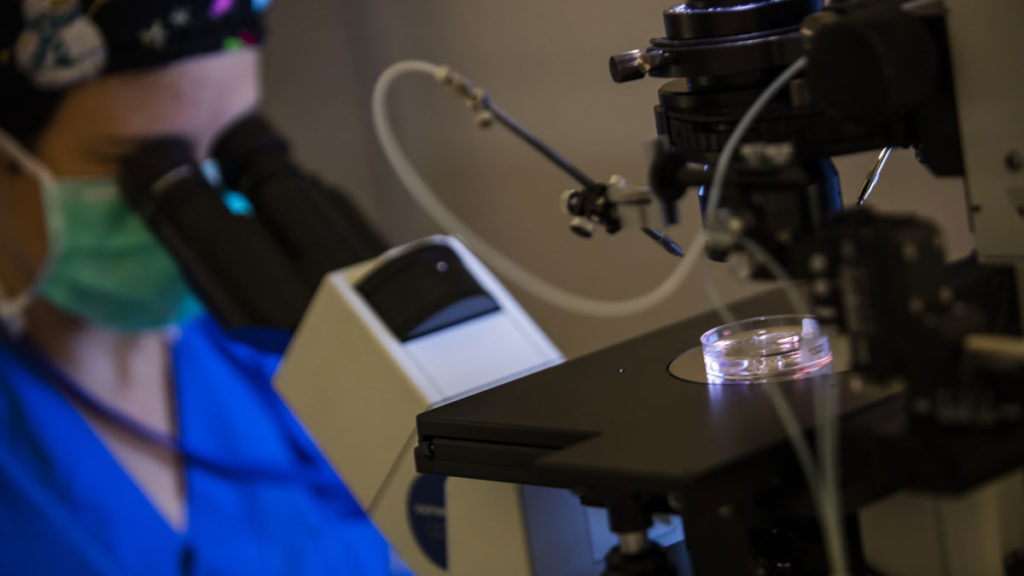
The assisted reproduction centers have begun to resume their activity once the health authorities have given permission to do so. As in any healthcare service, the security measures necessary to guarantee that both patients and healthcare personnel can carry out this activity without risk of contagion. In the same way, in the in vitro fertilization laboratoriesExisting protocols must be taken to extremes to avoid possible contagion to samples of biological material.
COVID19 security measures
It is not recommended to treat patients with symptoms associated with COVID-19 in the 14 days prior to attending the clinic or having been in contact with a person diagnosed or suspected of COVID-19 in the same period of time. In the case of clinic staff, If either of these two situations arose, he would not be able to carry out his work in person either.
During the stay of the patients in the clinic, all the measures of prevention, social distancing, personal protection and hygiene necessary to avoid contagion. Obviously, all the clinic staff have the obligation to follow a series of measures that go in the same direction.
Laboratories and operating rooms IVI
Both the in vitro fertilization laboratories and the adjoining rooms (operating rooms, sterilization rooms and freezing or semen laboratories) are spaces designed to treat patients and biological samples with extreme caution as regards the risk of contagion. By protocol, any patient or sample that is treated is considered as potentially infectious so the laboratory must adapt and maximize the protocols already existing to the specific characteristics of the new infectious agent.
Despite the scarcity of publications due to the recent appearance of SARS-CoV-2, the scientific societies recommend extreme precautions in the treatment of patients, in that of biological samples and in the protection of health personnel within the in vitro fertilization laboratory. In this way, several measures have been proposed to take to reduce the probability of contagion from patients or samples:
- Dilate the times dedicated to each procedure performed in the operating room to promote the distance between patients and adapt them to the new cleaning protocols and changes of staff clothing.
- Limit operating room and laboratory staff for the procedures that are carried out at all times, thus avoiding crowds.
- Extreme personal protection measures, hygiene and asepsis of both patients who access the surgical area and the personnel who work in it.
- Dispose of consumables immediately in contact with biological material.
- Dispose of sharps materials in special containers.
- Disinfect the workplace immediately after use with suitable disinfecting agents.
COVID19 in semen or oocytes
Regarding the contagion between samples, there is no scientific evidence on the presence of the SARS-CoV-2 virus in samples of ejaculate or ovarian tissue from infected patients. From these publications it can be deduced that the risk of contagion from biological samples from infectious patients to other samples is nil.
In any case, and routinely, it can be said that IVF laboratory personnel apply protocols of identification, incubation or storage designed to avoid possible cross-infection between samples from different patients. To this end, the gamete samples (semen or oocytes) from each patient are processed in vertical laminar flow hoods suitable for handling biological material, physically or temporarily separated from other samples; embryo culture in the IVF laboratory is performed individually in incubators; the storage of semen, oocytes or embryos is also carried out in a compartmentalized way, separating samples from different patients.
As far as work procedures are concerned, these will be reviewed in case more steps could be introduced. sample washing during handling. This would make it possible to dilute a possible infectious agent present in the culture medium where gametes or embryos are found and avoid a possible infection or re-infection of the patient when it comes into contact with the biological material.
In summary, the COVID-19 pandemic has led to a profound alteration of work routines in assisted reproduction clinics. At this time, clinics must adapt to the new situation, taking extreme measures of prevention and asepsis to guarantee patients a treatment of the highest quality with complete peace of mind.
Dr. Mireia Florensa
Laboratory Director
IVI Barcelona


