



- Hypermassive data analysis is being used to control the COVID-19 viral pandemic
- In assisted reproduction it is used to evaluate embryo quality
Sure we have heard a lot about Artificial Intelligence, but… Is it possible to apply it to medicine and specifically to assisted reproduction? We wanted to ask this question to Mª José de los Santos, director of the Laboratory of In Vitro Fertilization of IVI Valencia and this is what he has told us:
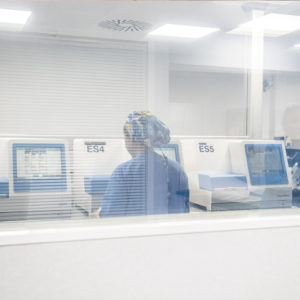
New technologies bring positive aspects in Biomedicine and this is undoubtedly the case of the artificial intelligence in the field of Assisted reproduction
Artificial intelligence and pandemics
Many of us have heard the term artificial intelligence and its use as a tool to help control the effects of COVID-19 pandemic that is affecting us globally. Well, this also turns out to be a very powerful tool with a lot of potential in Assisted reproduction.
The terms artificial intelligence or other related terms like deep learning or machine learning, appear more frequently in the media. We attend with admiration and sometimes skepticism, how the exploitation and hypermassive analysis of data is being used to control the viral pandemic of COVID-19, which is ruthlessly stealing the lives of our elders and other people with different backgrounds doctors.
Its application is solving new problems and shortening the response time in many of the challenges that the pandemic has brought with it. From the current control of the infection, to the development of vaccines, the massive sequencing of the viral genome, to the development predictive models that help us prevent future pandemics, the artificial intelligence is becoming a good ally in biomedicine.
Artificial intelligence in IVI laboratories
Well, its use is also very useful in the field of Assisted reproduction. Laboratories In Vitro Fertilization of the IVI clinics, several years ago they bet on the development of this technology hand in hand with dr. Marcos Meseguer. FWe come from pioneering laboratories in putting this new way of evaluating embryos into clinical practice. The time lapse It provided us with a large amount of knowledge about preimplantation embryonic development and about which morphokinetic events could have more relevance, more specific weight, on the implantation capacity in the maternal womb. Likewise, the implementation of time lapse In our daily routine, it represented the origin of what this technology means today in clinical embryology and also helped generate millions of data from digital image processing, as well as essential clinical data for model development.
At present the artificial intelligence is already being used in our laboratories to automatically identify the most relevant events throughout the embryonic development and grant, through complex mathematical algorithms, a numerical value that helps clinical embryologists to identify the embryos with the highest probability of implantation in a non-invasive. There are many publications worldwide that support it, although there is still much to explore and improve.
Among the fields of potential application are the implementation of the automation of some processes that may be, such as cryopreservation. Also its use in the field of telemedicine seems a promising field that could lead to an improvement in medical care practice and make it reach the most remote parts of the world. As well artificial intelligence It is already helping us in other lesser-known aspects of the laboratory field, such as quality controls, shortening reaction times, thereby maximizing service quality.
Predictive models
But without a doubt, the most significant contribution in our field is through the predictive models that help professionals and patients to make medical decisions about the best treatment to follow, thus favoring individualized medicine. The possibility that predictive models are nourished not only by data on embryonic development, but other types of demographic variables such as the age of the patients, body mass index, causes of infertility, response and ovarian reserve, hormonal profiles, seminal quality, etc. would help address the problems with a more holistic strategy, taking into account many parameters as a whole and, thereby helping to increase the success rates of the techniques of Assisted reproduction, optimizing resources and shortening the time necessary to achieve healthy pregnancy and babies.
Dra. Mª José de los Santos
PhD in Biology
Director of the In Vitro Fertilization Laboratory
IVI Valencia


