



What are the benefits of genetically testing my embryos?

- The PGT is a technique that allows the embryo to be chromosomally analyzed
At IVI we work so that the path to motherhood is the safest for both the future baby and the mother. And that happens, largely due to the transfer of a single embryo. Finding and choosing the best embryo to transfer has become a maxim in our clinics. We have asked the Dr. Fernando Bronet, director of the In Vitro Fertilization Laboratory of IVI Madrid Tell us in this post, the PGT technique, which allows us to know which embryos are healthier and therefore which ones have the best implantation guarantees.
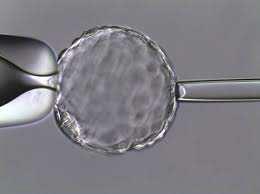
Preimplantational Genetic Testing, or as it is currently called PGT (Preimpantational Genetic Testing), is a assisted reproductive technique that allows us to know the chromosomal status of the embryos in the process prior to their implantation in the maternal uterus. Therefore, the PGT responds to a very frequent concern within couples with gestational desire: i can’t get pregnant, since many of the fertility problems We find them in that these couples present a higher rate of embryos with chromosomal alterations. This is where we find the main advantage of this assisted reproductive technique, allows us to differentiate those healthy embryos from those that are not before the moment of implantation.
PGT and pregnancy rates
By being able to differentiate embryos without chromosomal abnormalities from the rest, we can perform a more efficient embryo selection since we will avoid transferring embryos whose implantation potential is lower, as in the case of embryos with monosomies (lack of a chromosome) or reduce the risk of spontaneous abortions (due to embryos with chromosomal abnormalities) or face the difficult decision of having to terminate your pregnancy in the case of confirming the suspicion of some important genetic / chromosomal alteration in the embryo.
That is, on the one hand, this tool will increase the success rates in the assisted reproductive techniques, and on the other, It will allow us to reduce the time to achieve an evolutionary gestation, at the same time that it reduces the abortion rate. Some authors have described an improvement in the cost-efficiency ratio, related to the time and number of treatments required to achieve a healthy pregnancy at term.
PGT and coronavirus
Given the current situation, pandemic caused by coronavirus, the time invested in achieving this pregnancy is of vital importance, making repeated failed transfers to achieve a pregnancy entails assuming some risks that could be avoided (complications caused by an abortion, greater number of trips and possibly higher cost).
The PGT is performed on embryos in culture, so it requires a treatment of in vitro fertilization (IVF). Therefore, ovarian stimulation of the patient is necessary. It is here that some doubts arise about carrying out cycles of Assisted reproduction right now. The laboratories of IVF They are accustomed and prepared to work with infectious patients, since the origins of these techniques have worked with patients with HIV, HAV, HBV or HCV. The facilities of the laboratories of IVF They require measures to avoid any type of contagion both from the personnel working in these laboratories and from the embryos even when these embryos remain frozen. At present, with the usual handling of biological samples in Embryology laboratories, there is no evidence of the presence of viruses that cause other communicable infectious diseases in oocytes and cryopreserved embryos of affected patients, nor in the culture media or in the liquid nitrogen with which they came into contact.
The most widespread technique for performing PGT is the blastocyst stage biopsy. This biopsy is more effective than other types of biopsy (such as polar corpuscle or on day 3 of embryonic development) since it analyzes the chromosomal status of the embryo taking into account both the maternal and paternal genetic contribution and contributes 2-6 cells to the genetic analysis, thus, a lower risk of obtaining a false diagnosis is achieved. For these reasons, this technique has an increased positive predictive value compared to other types of biopsy. Today this technique does not pose any risk to the embryo when performed in experienced hands Blastocyst stage biopsy generally requires embryos to be frozen, pending genetic results. The thawing results of these embryos are similar to those of embryos where no biopsy has been performed, around 95%, thus confirming the viability of the embryos.
Dr. Fernando Bronet Campos
Laboratory Director
IVI Madrid


