


Sea moss or sea vegetables are among the types of algae that grow in the sea.
They are the food source of marine life and can vary in color from red to green to brown to black.
Sea moss grows along rocky beaches around the world, but is commonly consumed in Asian countries such as Japan, Korea, and China.
They are very powerful and can be used in many dishes such as sushi, soups, stews, salads, supplements, and smoothies.
In addition, sea moss is very nutritious and therefore even a small amount works well.
Health Benefits of eating Sea Moss
Here are 7 of its scientifically supported benefits.
Has Iodine and Tyrosine, Thus Supports Thyroid Functions
The thyroid gland secretes hormones that control growth, energy production, reproduction, and repair of damaged cells in the body.
The thyroid uses iodine to produce hormones. If there is not enough iodine, symptoms such as weight changes, fatigue, and neck swelling appear over time.
It is recommended to take at least 150 mcg of iodine every day.
Sea moss has the capacity to absorb significant amounts of iodine from the sea.
The iodine content varies considerably according to the type, and it is also important how it is grown and how it is processed. Even a dry leaf sea moss can meet 11-1989% of the daily need.
Below are the average iodine content of three different types of dry sea moss:
- Nori: 37 mcg per gram, 25% of your daily need.
- Wakame: 139 mcg per gram, 93% of daily need
- Kombu: 2523 mcg per gram, 1682% of the daily need
Kelp is one of the best sources of iodine. Only 3.5 grams is 59 times more than your daily need.
Sea moss also contains the amino acid tyrosine, which is used in the body together with iodine, and benefits the thyroid gland in the production of two basic hormones produced by the thyroid.
A Good Source of Vitamins and Minerals
Each sea moss species has specific nutritional values.
Sprinkling some dry sea moss over your food will not only add flavor, texture and aroma, but also increase the vitamin and mineral values significantly.
Generally, up to 7 grams of spirulina provides:
- Calories: 20
- Carbs: 1.7 grams
- Protein: 4 grams
- Fat: 0.5 grams
- Fiber: 0.3 grams
- Riboflavin: 15% of the need
- Thiamine: 11% of your need
- Iron: 11% of your need
- Manganese: 7% of the need
- Copper: 21% of the need
Sea moss also contains small amounts of vitamins A, C, E and K, as well as folate, zinc, sodium, calcium and magnesium.
Although it provides a small part of some of the daily needs above, using it as a spice once or twice a week is helpful for adding more food to your diet.
Proteins in some sea moss species, such as spirulina and chlorella, contain all the essential amino acids. So you can get all the essential amino acids with sea moss.
Sea moss is also a good source of omega-3 oils and vitamin B12.
Even the dried green and purple sea mosss contain remarkable amounts of B12. One study found that just 4 grams of nori sea moss contains 2.4 mcg, or 100% of the daily requirement.
However, there are still debates about whether the body can use B12 from sea moss.
Has a Variety of Protective Antioxidants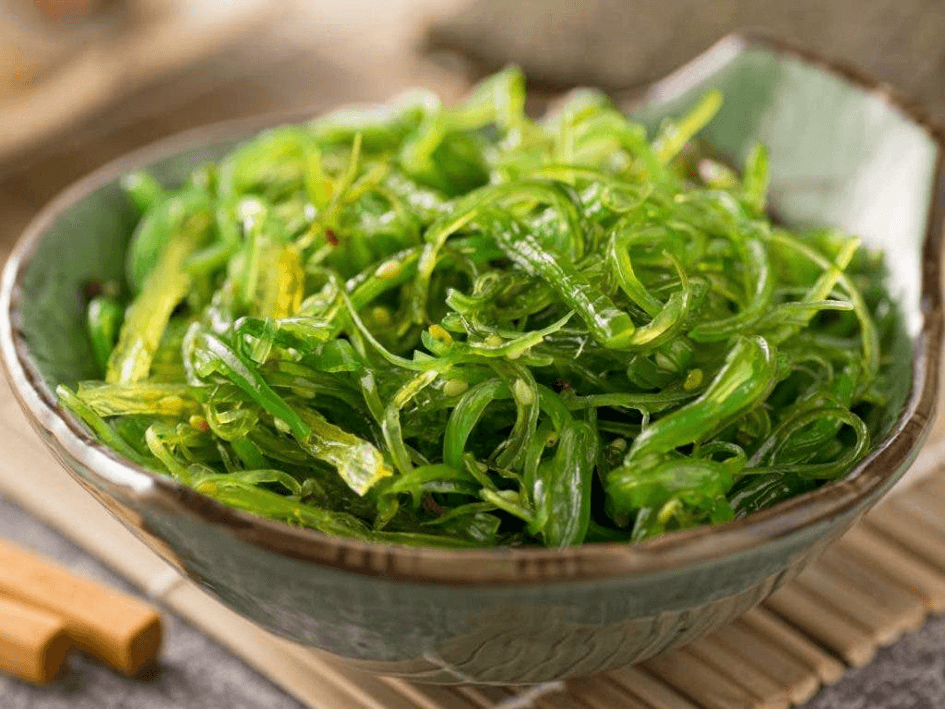
Antioxidants make components in your body called free radicals less reactive.
This makes them less likely to damage your cells.
In addition, excessive free radical production is thought to be the underlying cause of many diseases such as heart disease and diabetes.
In addition to having antioxidant vitamins such as A, C and E, sea moss also has many beneficial herbal ingredients, including flavonoids and carotenoids. These are said to protect the cells in your body from free radical damage.
There are many studies specifically on a carotenoid called fucoxanthin.
The essential carotenoid and antioxidant capacity found in this brown algae is 13.5 times that of vitamin E.
It is stated that Fucoxanthin protects cell walls better than vitamin A.
Although the body cannot always use fucoxanthin well, it is possible to improve its absorption by consuming it with oils.
Yet the wide variety of herbal ingredients found in sea moss work together to create powerful antioxidant effects.
Provides Fiber and Polysaccharides That Can Support Intestinal Health
Gut bacteria play an important role in your health.
It is estimated that there are more bacteria in the human body than in human cells.
This imbalance between good and bad bacteria can cause illness.
Sea moss is an excellent source of fiber, and the fibers are good for gut health.
The fibers can make up 25-75% of the dry weight of the moss. This amount of fiber is higher than most fruits and vegetables.
The fibers resist digestion and therefore become a food source for the bacteria in your large intestine.
In addition, certain sugars called sulphurous polysaccharides found in sea moss appear to support the growth of good bacteria in the gut.
These polysaccharides also increase the production of short-chain fatty acids and these acids provide support and nourishment to cells in the intestinal walls.
They Can Help You Lose Weight By Reducing Hunger
Sea moss has a lot of fiber, and fiber has no calories.
The fibers in sea moss can also reduce the rate of stomach emptying. So you will feel full for longer.
It is stated that sea moss has anti-obesity effects. Especially in some animal experiments, the fucoxanthin content in algae appears to reduce body fat.
In another animal experiment with mice, it was seen that mice consuming fucoxanthin lost weight, while mice consuming a control diet did not.
Similar results have been obtained in other animal experiments. For example, fucoxanthin has been shown to significantly lower blood sugar in mice, which contributed to weight loss.
Although results in animal experiments are very promising, human experiments are still in the process of being implemented.
May Reduce the Risk of Heart Disease
Heart diseases are among the most common causes of death in the world.
Factors that increase your risk include high cholesterol, high blood pressure, smoking and not being physically active, and overweight.
Interestingly, sea moss can help reduce blood cholesterol levels.
In an eight-week study with mice, mice fed a high-cholesterol and fat diet were fed 10% frozen dried sea moss. The mice had a 40% reduction in total cholesterol, a 36% reduction in bad cholesterol and a 31% reduction in triglyceride levels.
Heart disease can also be caused by excessive blood clotting. Carbohydrates called fucan in sea moss can help prevent blood clotting.
In fact, in an animal experiment, fucans made from sea moss have been shown to be as effective as drugs that prevent clots.
Researchers have also started looking at peptides in sea mosss. In early studies with animals, it has been shown that these protein-like structures can block the neural pathways in your body that increase blood pressure.
However, for these results to be confirmed, large-scale human experimentation is required.
May Reduce Type-2 Diabetes Risk By Improving Blood Sugar Control
Diabetes is a big health problem.
It occurs as a result of the body’s inability to balance blood sugar levels over time.
It is thought that by 2040, 642 million people in the world will have type 1 or type 2 diabetes.
Interestingly, sea moss has become the focus of research to support people at risk of diabetes.
An 8-week study with 60 Japanese people found that fucoxanthin could improve blood sugar control.
Participants took one of the local sea moss oils containing 0 mg, 1 mg, or 2 mg of fucoxanthin. Blood sugar levels of those who took 2 mg were better than those who took 0 mg.
In the study, those with a genetic predisposition to insulin resistance, which generally accompanies type-2 diabetes, had additional improvements in blood sugar levels.
In addition, another ingredient in sea moss called alginate prevented blood sugar spikes in animals that consumed a sugary meal. It is thought that alginate may reduce the passage of sugar into the bloodstream.
In some other animal experiments, it is also stated that extracts of sea moss provide better blood sugar control when added to the diet.
Potential Dangers of Sea moss
Sea moss is considered a very healthy food, but consuming too much can have some potential dangers.
Excess Iodine
Sea moss contains too much and potentially dangerous iodine.
Interestingly, the high iodine consumption of the Japanese community is seen as the reason they are among the healthiest people in the world.
However, the average daily iodine intake in Japan is estimated to be 1000-3000 mcg. This poses a risk to those who consume algae every day, as the upper tolerable limit for adults is 1100 mcg.
Fortunately, in Asian cultures, sea moss is often consumed with foods that prevent iodine from being absorbed by the thyroid gland. Among these foods called Goitrogen, there are products such as broccoli and cabbage.
In addition, it is necessary to know that sea moss is water soluble. So cooking and processing can affect its iodine content. For example, if you boil kelp for 15 minutes, it loses 90% of its iodine content.
Although there are some case records of consumption of iodine-containing kelp moss and loss of thyroid function, the thyroid returned to normal when consumption was stopped.
However, excessive consumption of sea moss can affect thyroid function, and the symptoms of too much iodine are similar to insufficient iodine.
If you think you are consuming too much iodine and you experience symptoms such as neck swelling and weight changes, reduce your consumption of iodine-rich foods and talk to your doctor.
Heavy metals
Sea moss can absorb and store minerals in concentrated amounts.
This poses a health risk because heavy metals such as cadmium, lead and mercury can be found in large quantities in sea mosss.
However, the content of heavy metals in sea moss is generally less than the maximum set in most countries.
One recent study found concentrations of 20 metals in 8 different sea mosss in Asia and Europe. The amount of cadmium, aluminum and lead in 4 grams of each sea moss was not at a level that could cause serious health problems.
However, if you regularly consume sea moss, there is a possibility that heavy metals accumulate in your body over time.
If possible, buy organic sea moss because their heavy metal content is much lower.
As a result
Sea moss is gaining increasing popularity in all cuisines of the world.
It is one of the best sources of iodine, which makes it support the thyroid gland.
It also has other vitamins and minerals such as K, B vitamins, zinc and iron, as well as antioxidants that prevent cell damage.
However, excess iodine in sea moss can also damage thyroid function.
Consume this ancient ingredient regularly but in small amounts for optimum health benefits.
You can also check: https://en.wikipedia.org/?title=Seamoss&redirect=no


Thanks for explaining the benefits of sea moss to prevent Diabetes Risk.