


Research and continuous improvement in all our processes is one of the maxims for IVI. The constant search for new resources, the study of new techniques to improve results and treatments to help fulfill our patients’ dream of starting a family is one of our main objectives.
In this sense, one of the lines of research to which more resources are being allocated is the improvement of embryo selection, thanks to advances in genetics and even in the application of Artificial Intelligence.
In the framework of the 35th Congress of the ESHRE, the largest Congress of Assisted Reproduction, IVI, among other works, has presented two innovative studies on the relationship between the culture medium and success in pregnancy.
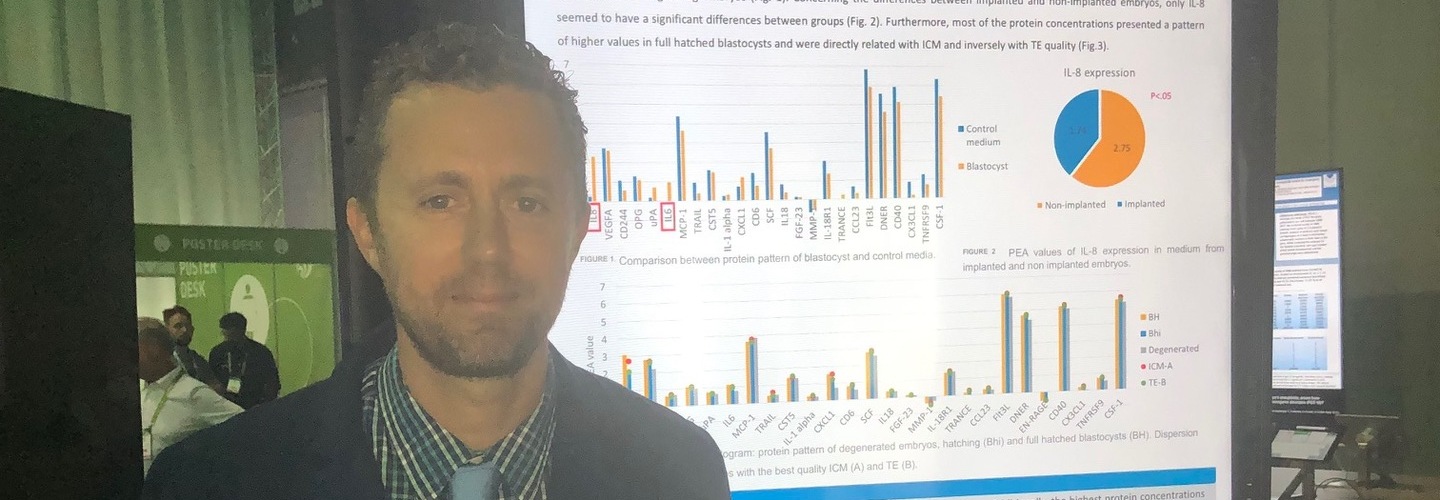
In the first one, and as a novelty, the proteins secreted by the embryo into the culture medium have been analyzed. With the help of artificial intelligence, together with the images that we obtain through two models of cinematic incubators, such as the EmbryoScope, IVI has developed a new method that combines images with the protein selection method, concluding that embryos that secrete certain types of Proteins are more likely to implant and promote pregnancy.
The second of the presented works is based on the study of the culture when it is carried out in a multiple way, in situations in which there are between 10 and 12 embryos in the same drop.
The study reveals that there is a different oxidative profile when the embryos are of quality and when they are not. The more active and higher quality embryos are, the more oxidation they generate within the culture medium, which indicates that they will be better able to carry out the transfer and improve the success rate of the treatment. In contrast, in the classification criteria, the level of oxidative stress decreased as the quality of the embryo worsened.
49 accepted communications: 14 oral, 31 posters and 4 invited sessions
ESHRE is the largest European congress on assisted reproduction, a meeting place for great professionals from different parts of the world, where important conclusions are reached each year that will mark the future in the reproductive field.
In this edition, IVI has 49 accepted communications, 14 of them oral and 31 posters, to which are added the 4 presentations, in the general program.


