


- IVI discovers that the use of nitrogen slush at -210or in embryo vitrification could increase their survival, compared to the current technique
- Non-invasive preimplantation genetic testing for aneuploidy is the starting point to continue to seek improvement in results, and that can become a useful diagnostic tool
- These important security investigations are presented on the occasion of the celebration of 76or Congress of the American Society for Reproductive Medicine (ASRM), in which IVI has presented a total of 74 papers
These days the 76or edition of Congress of the American Society for Reproductive Medicine (ASRM), an important event in the sector in which IVI has presented 74 works with important achievements for assisted reproduction in terms of safety and success, two of the four main pillars on which the success of IVI is based – safety of our patients, cutting-edge research, managing to stop time and have the best success rates -.
Safer assisted reproduction
Now more than ever, security is a fundamental pillar for IVI. For this reason, the vast majority of research we have carried out pursues advances in safety and precision, with the aim of offering the best guarantees to women and couples who come to our clinics to achieve what they most want.
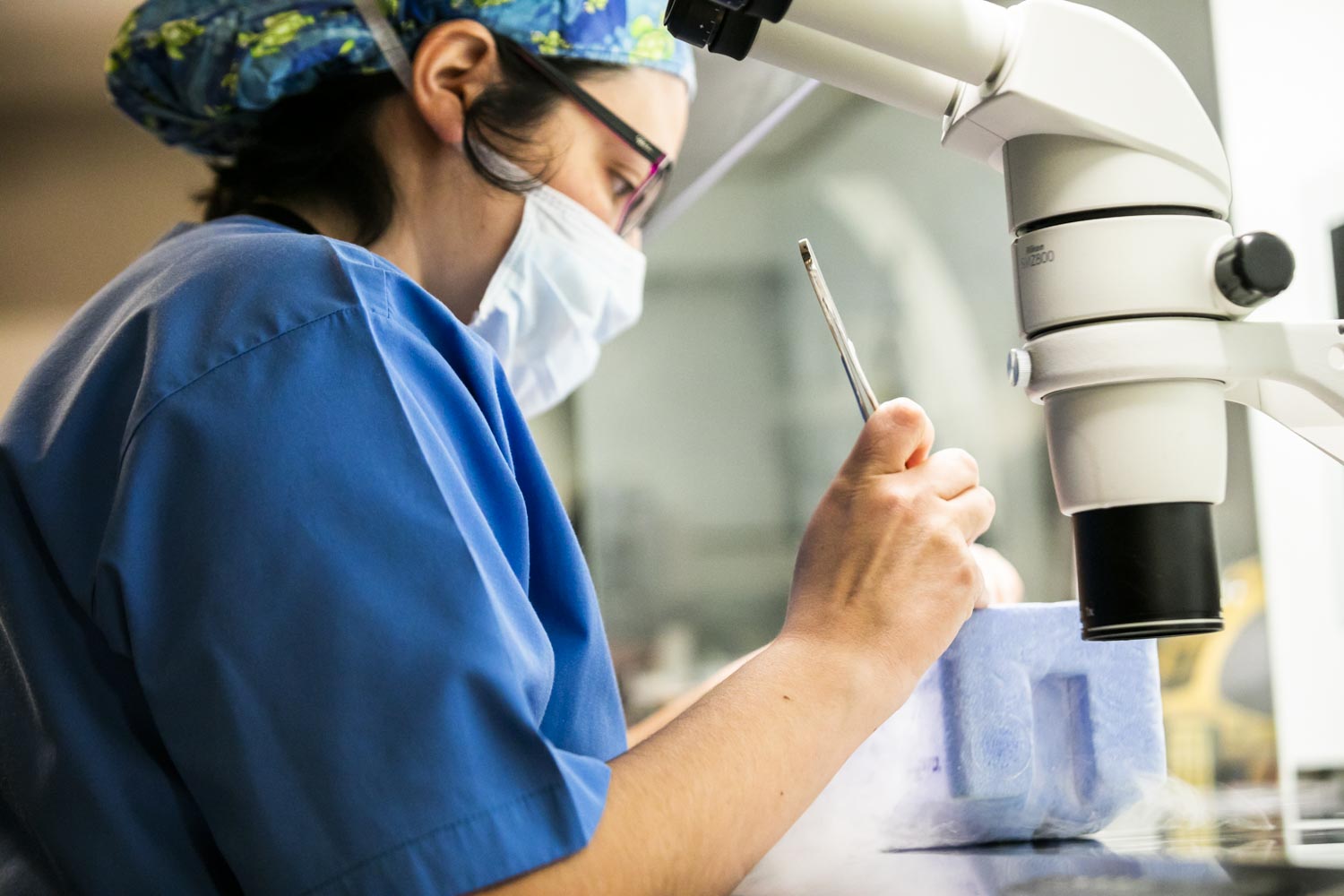
In this sense, one of the most important investigations that IVI presents at the ASRM is focused on improving the technique of oocyte vitrification. “One of our studies presented at this year’s ASRM edition shows how the use of nitrogen slush at -210or for embryo vitrification could increase their survival rate. Our researchers have observed that the cryopreservation of the blastocyst in slush nitrogen results in a greater survival after thawing, due to the reduction of the toxicity associated with vitrification compared to conventional liquid nitrogen at -196º – the one currently used in preservation of gametes and embryos -. This is promising for improving the efficiency of cryopreserving embryos for later use and for optimizing the results of in vitro fertilization ”, explains Dr. Antonio Requena, IVI’s medical director.
Improvement of preimplantation genetic testing
On the other hand, two major lines of IVI research, presented in this edition of the ASRM, focus on the analysis of the preimplantation genetic testing. One through a trophectoderm biopsy and the other, with a non-invasive approach, that analyzes the culture medium of the embryos.
“It is important to highlight our studies in relation to the verification of information from genome tests. Currently, preimplantation genetic testing for aneuploidy (PGT-A) is performed by analyzing biopsies of trophectoderm. Here, we report the validation of a platform PGT-A we have developed that provides 100% accuracy in predicting embryos that will not implant. In addition, we have analyzed the reliability of a platform non-invasive preimplantation genetic testing for aneupoidy (niPGT-A). Unfortunately, at the moment, the niPGT-A appears to lack sufficient precision to be assumed as a useful diagnostic tool. Our challenge? Continue working to fine-tune the results of this type of technique ”, says Dr. Requena.
IVI’s commitment
From IVI we will continue conducting and leading research to achieve the latest advances and the improvement of the techniques used in reproductive medicine, shaping the future of this specialty that so many dreams help to fulfill. “Every year we share our most outstanding findings at the ASRM congress. We achieve these results thanks to our commitment to scientific research. We are aware that these studies will mark the lines to be followed to increase at each step the success rates of treatments, always prioritizing the safety of our patients. We aim to give them a reason, not only to have hope, but also to trust that they will achieve their dream of being parents ”, concludes Dr. Antonio Requena.


