


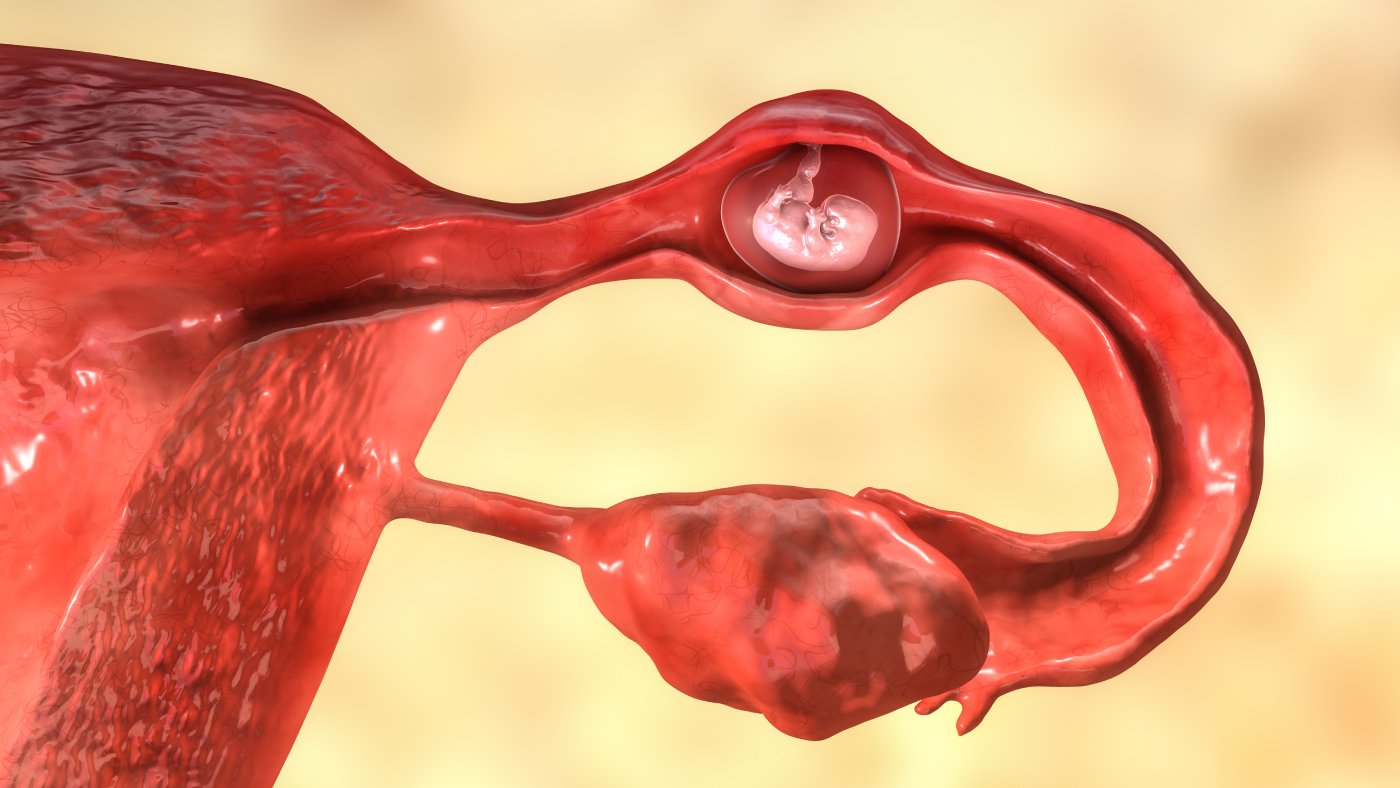
Surely you have heard of the ectopic pregnancy. This is a relatively common type of pregnancy, as affects 1 in 50 pregnancies. Ectopic pregnancy is the implantation of the fertilized egg outside the woman’s uterususually in the fallopian tubes (in 98% of cases), and which can rarely occur in the ovary, abdomen or cervix.
Since it is in an inappropriate place, the fertilized ovum fails to evolve and that is why anomalies usually develop that prevent pregnancy and the consequence is that it is expelled by the body itself. It is possible that even before the woman knows she is pregnant, a miscarriage can occur.
Causes of ectopic pregnancy
The blocked fallopian tube It is the main cause of ectopic pregnancy, since it prevents the passage of the ovum through the fallopian tubes and, as a consequence, its arrival in the uterus. On the other hand, 50% of the cases of fallopian tube obstruction are due to a pelvic inflammatory disease that can cause infertility called salpingitis, which causes inflammation of the fallopian tubes. In relation to it, it should be remembered that the most common cause of pelvic inflammatory disease is chlamydia, a sexually transmitted pathology that can cause inflammation without producing symptoms.
The main risk factors for ectopic pregnancy are:
- endometriosis
- Tubal ligation
- Adhesions caused by scars from previous pelvic surgery
- Smoke
- Previous induced abortions
- chlamydia
- Age of the woman (when over 40 years old)
Symptoms of ectopic pregnancy
Sometimes the embryo is directly discarded by the body, even before producing any symptoms of pregnancy. It is very possible that the woman did not even realize that she was pregnant and, of course, that she did not know that it was an ectopic pregnancy either. In other cases, it can cause slight pain and bleeding, which end up being interpreted as a point of irregularity in menstruation.
If the embryo begins to develop outside the uterus, abdominal or pelvic pain may be severe, and other symptoms such as nausea, discomfort, and bleeding may appear.
Our body is very wise, so it is preferable that, as soon as there are any symptoms of pain or if something causes us discomfort, we consult a doctor as soon as possible.
How is ectopic pregnancy detected?
The diagnosis of ectopic pregnancy can be considered as something relatively simple, in the case of assisted reproduction patients. Taking into account that these patients receive the positive result of the beta, when they go to the consultation to locate the pregnancy by ultrasound, the specialist will not find it inside the uterus. This will be the same in the case of women who, although they have achieved a pregnancy naturally, have taken some type of pregnancy test to confirm it.
Treatment of ectopic pregnancy
Regarding the treatment of ectopic pregnancy, there are different options. There may be a more conservative option, which advocates waiting for the condition to resolve itself naturally. However, there will be times when the specialist uses a medical treatment called methotrexate. Finally, there is the option of surgical treatment, in which the fallopian tube or, at least, a small piece of it would have to be cut.
Can I get pregnant after an ectopic pregnancy?
Most women can have children after having suffered an ectopic pregnancy in the previous pregnancy. However, some of its possible causes and/or effects can cause infertility. Methotrexate has previously been mentioned as a treatment option for ectopic pregnancy. In the cases in which this drug is administered, it will be necessary to wait to return to seek pregnancy, since it can have side effects that affect the fetus.
The first step to be a mother
If your dream is to be a mother, at IVI you will have the help and experience of a top-level medical team that addresses each case individually. Make an appointment to make your dream come true.

