


When facing a gestation process, it is known that both the embryo and the endometrium are two main actors. Within the framework of the 38th Congress of the European Society of Human Reproduction and Embryology (ESHRE), doctors Juan Antonio García Velasco and Elkin Muñoz who analyze the influence of both on recurrent implantation failure and biochemical pregnancy.
What is implantation failure and what causes it?
Implantation failure occurs when pregnancy is not achieved after the transfer of 2 chromosomally normal embryos or 4 blastocysts. When this happens, it is worth asking what is the cause that has caused it? Is it due to the endometrium or the embryo? This issue has motivated numerous investigations and given rise to different hypotheses in relation to the role of these two variants in embryo implantation.
In this sense, Dr. García Velasco, scientific director of IVI, has offered in this edition of the ESHRE a session invited by the Group Merck, talking about the “Myths and realities of endometrial receptivity in Assisted Reproduction”. In it he has outlined the key aspects of the analysis to achieve success in assisted reproduction treatments.
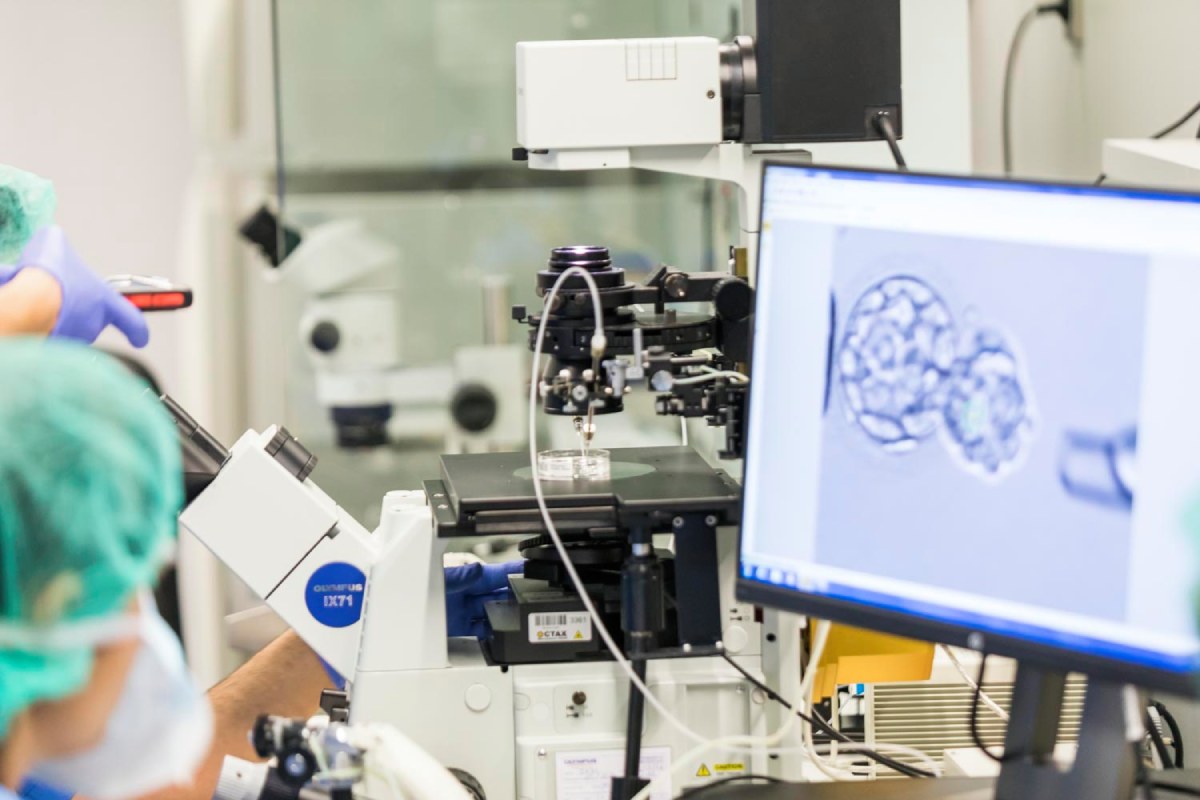
“When we talk about ‘recurrent implantation failure’, a concept that has recently been redefined, we know that what fails in most cases is the embryo. In this sense, it becomes essential to know what the embryos are like ‘inside’. That is, go beyond morphology, what we see under the microscope, and study them in depth. And for this, preimplantation genetic diagnosis (PGT-A) will help us confirm whether the embryos are chromosomally normal or not, something that explains, not all, but the vast majority of implantation failures”explains Dr. García Velasco.
Aspects that influence the success of treatments
Currently, assisted reproduction centers study various parameters that have a greater or lesser influence on the success of treatments. Some of them will be especially relevant for improving the results of this type of patient, others perhaps not so much.
A simple aspect but one that is clearly related to reproductive success is endometrial thickness. If this does not reach 6-7 millimeters, the results will be worse. But is endometrial transcriptomics still as revolutionary as it first seemed?
“The many receptivity tests on the market are very interesting tools, but they do not benefit all patients equally. We have a long way to go to understand in which patients these types of techniques have the best results. The same happens with new fields of study such as the endometrial and vaginal microbiota, and chronic endometritis; two attractive and promising areas, with broad prospects. However, we still have to clarify the diagnostic criteria and, above all, the profile of patients who are going to benefit, as well as confirm that the treatments for the anomalies found really improve the prognosis of the patients”concludes Dr. García Velasco.
Science advances every day, outlining new horizons that makes professionals in our sector move towards more precise diagnoses and personalized treatments, with the aim of fulfilling the gestational desire of patients in the shortest time and with the greatest guarantees. Knowing, choosing and applying the most optimal techniques in each case means being one step closer to the goal every day.
Biochemical pregnancy loss: Embryo or endometrium?
As we have said, both are a fundamental part of the gestation process. Although the causes of biochemical pregnancy loss are not known today, there are several factors that are related to this. Some of them could be related to age, low-quality eggs and embryos, or altered endometrial receptivity.
“Biochemical pregnancy is a very frequent situation in natural reproduction, but even more so in assisted reproduction. It occurs when, after fertilization of an egg and implantation of the embryo in the mother’s uterus, the embryonic development process is interrupted after a few days and the pregnancy stops evolving. Its greater frequency in the field of assisted reproduction is due to the fact that we are attentive to the early increase in the levels of the pregnancy hormone in the blood of patients, which is why we detect more biochemical pregnancies than in natural gestation”comments Dr. Elkin Muñoz, director of IVI Vigo and A Coruña.
Study on the relationship of the embryo or endometrium in biochemical pregnancies
This is the aspect that has motivated the study “Is biochemical pregnancy loss (BPL) associated with embryo or endometrium? A multicentre retrospective study with +7000 cases”, led by Dr. Muñoz and presented at the current edition of the ESHRE, held these days in Milan.
“This is a retrospective study with a sample of more than 7,000 patient cases and a duration of 8 years, which results in a general biochemical pregnancy rate of 8%. We have seen that this frequency is not reduced after analyzing the embryos in their chromosomal content or analyzing the endometrial receptivity. Therefore, it is necessary to learn more about the intrinsic phenomenon that leads to biochemical pregnancy in order to advance in its prevention”points out Dr. Muñoz.
These 7,000 cases studied have been divided into 4 groups:
- Patients whose embryos were studied in order to select those chromosomally normal
- Patients who underwent an endometrial receptivity study
- Patients who received two analyses, chromosomal and endometrial
- Finally, patients belonging to the control group who only underwent conventional IVF
“Although the biochemical pregnancy rate is slightly lower in the group with a higher level of analysis -PGT-A and endometrial receptivity test-, the truth is that, as we anticipated, the differences are not statistically significant. This leads us to conclude that we must continue to investigate the causes of a problem that is still not resolved and that affects almost 1 in 10 pregnant women”concludes Dr. Muñoz.


