


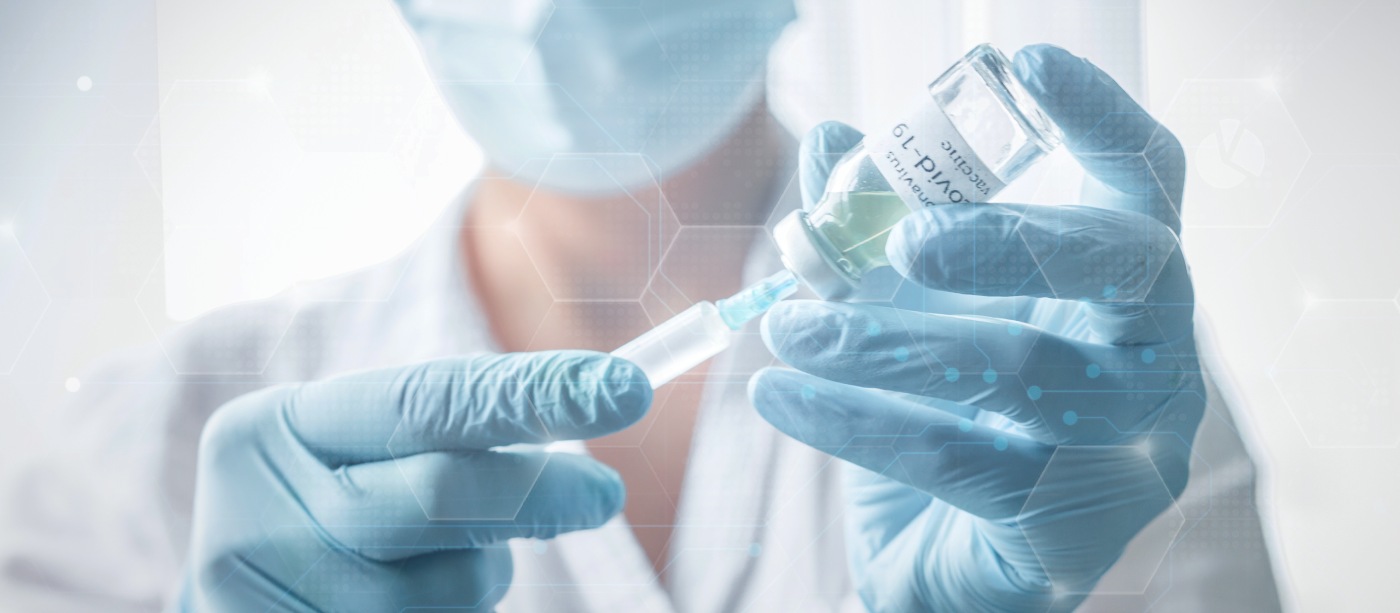
With the emergence of the coronavirus in our lives, more than two years ago, a feeling of uncertainty in the face of this unknown disease settled in most of us. Months later, with the administration of the different doses against this virus, that feeling was transferred to the possible secondary effects of this. At IVI, from the very beginning of this pandemic, we have focused several of our lines of research on the influence of COVID on fertility, in order to provide you with solutions. Now, we are talking about two of our most recent investigations, focused on the influence of the vaccine on assisted reproduction treatments.
Are there side effects of the vaccine on fertility?
As we have mentioned, a certain feeling of concern about the possible side effects of the COVID-19 vaccine on health is common in our society. Therefore, assisted reproduction was not going to be less. At this point, and taking into account the pandemic situation in which we find ourselves, it is important to know if contagion or preventive vaccination have negative effects on the success of reproductive treatments that women and couples undergo to fulfill their gestational desire. .
In this regard, we would like to highlight two of our most recent investigations, presented in the latest edition of the ESHRE, the Congress of the European Society for Human Reproduction and Embryology, held this year in Milan. These are the investigations, “Covid-19 vaccine does not affect sustained implantation rates after single euploid embryo transfer, a retrospective study with 4868 cases” and “The type of vaccine received against SARS-CoV-2 does not affect ovarian fuction in an Assisted Reproduction cycle”.
Does the COVID-19 vaccine affect implantation rates?
“In the first of our studies we have evaluated the implantation rate sustained over time. That is, those pregnancies that are evolutionary, in a group of patients where PGT-A (Preimplantation Genetic Diagnosis) was performed to ensure that the quality of the embryo was adequate and homogeneous throughout the study population. The analysis of this information confirms that there is no negative influence of the type of vaccine administered, or the number of doses, or the time elapsed between vaccination and reproduction treatment, which is information that can reassure anyone who may have concerns or doubts about these types of circumstances”explains Dr. Antonio Requena, general medical director of IVI.
This retrospective study had a sample of nearly 5,000 cases. They analyzed the influence or not of the vaccine against COVID-19 in implantation rates, following a transfer of single chromosomally normal (euploid) embryos. This study focused on the type of vaccine that the patient received, the number of doses, and the time that had elapsed between the vaccine and the start of assisted reproduction treatment.
“Given the novelty of this disease, there is a need for information on its effects on reproductive health. Studies like this one help us resolve some concerns about the possibility that either the infection or the vaccine could negatively affect endometrial receptivity. However, and although it is necessary to continue evaluating this field of study in depth, what is clear is that targeting motherhood is not a reason to delay vaccination against COVID-19 “adds Dr. Requena.
And in the ovarian function?
The second of the research presented at ESHRE suggests that the type of vaccine received against COVID-19 does not negatively influence the ovarian function of women undergoing reproductive medicine treatment.
“Since the COVID-19 pandemic was declared and its consequent intensive search for vaccines to achieve herd immunity, there have been several sources of information pointing to a relationship between vaccination against COVID-19 and sterility. At this point, the objective of this work has been to evaluate and confirm that there is no negative impact of the different types of vaccines on female fertility”points out Dr. Requena.
This second study, also retrospective, was carried out between the months of January and October of last year. It involved 510 women vaccinated against COVID-19 and who had undergone assisted reproduction treatment with their own eggs, at one of the IVI clinics in Spain.
“As in the previous work, more data and an increase in the sample size are necessary to confirm these conclusions in the general population, but this research represents an interesting and hopeful starting point, being, in addition, the first study that evaluates whether the type of vaccine administered against SARS-CoV-2 affects ovarian function in reproductive treatments”concludes Dr. Requena.
Other data on the incidence of COVID-19 or its vaccine on fertility
A few months ago, two years after the appearance of the virus in our lives and 12 months since the start of vaccination in our country, we cleared up another series of doubts about the relationship between the vaccine, fertility and assisted reproduction treatments .
Thus, although it is known that the vaccine could be influencing the woman’s menstrual cycle in some cases, this is not related to assisted reproduction treatments nor is it a reason to postpone it. In this sense, the Coronavirus infection does not force us to delay undergoing reproductive medicine treatment either.


