


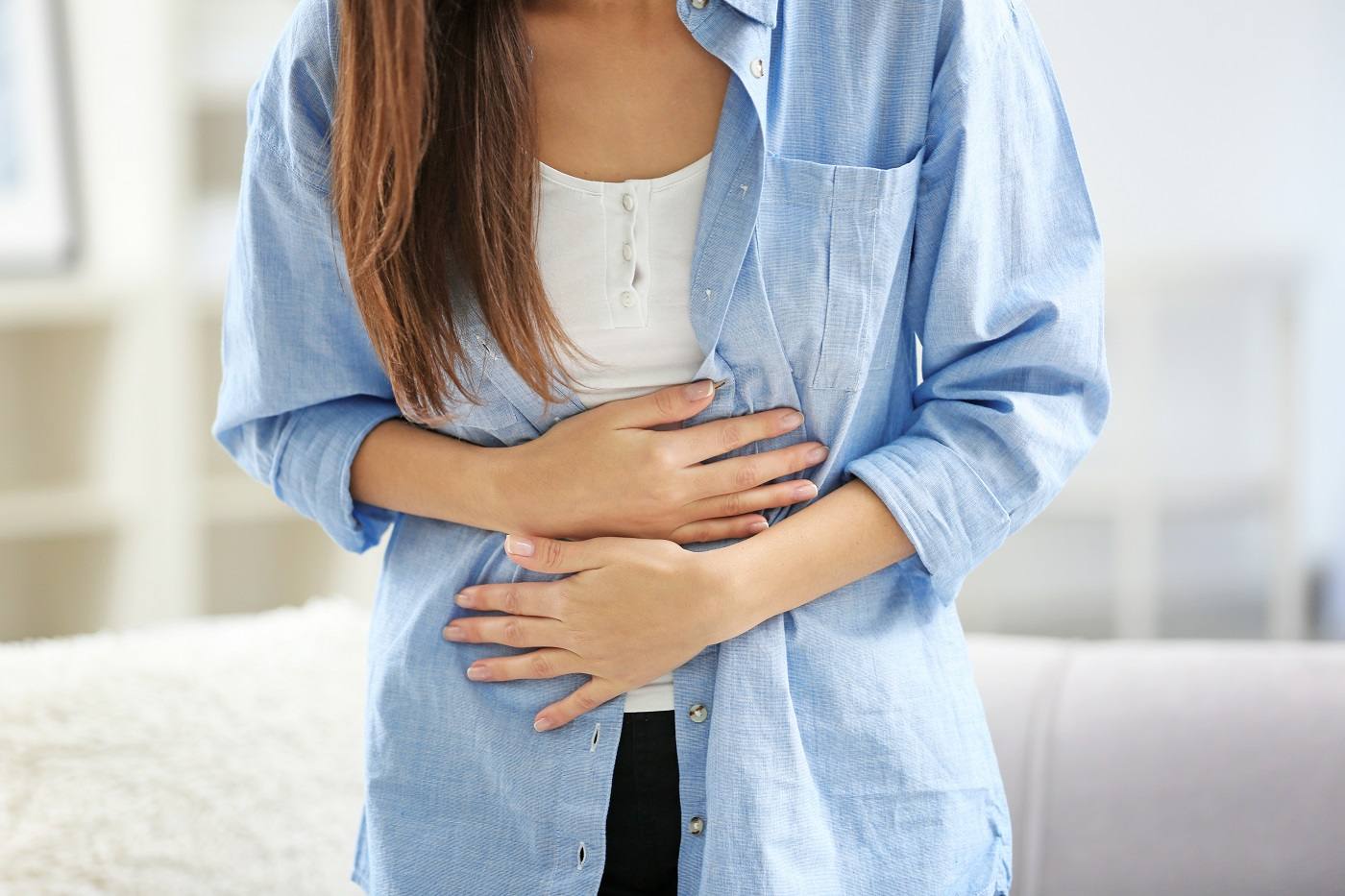
It is not the first time we have talked about Endometriosis, a silent and unknown disease. Therefore, at IVI we want to contribute our grain of sand for your knowledge and awareness. And it is that even today, after more than 50 years of research, only those who suffer from it know what this disease means. As we said, silent and unknown because its symptoms are called into question and normalize, under the belief that the period must hurt. We also talk about the chances of spontaneous pregnancy in cases of Endometriosis.
Infertility: Symptom and Cause of Endometriosis
In our interest to make Endometriosis known to women, we have dedicated episode 7 of The IVI Podcast with Nuria Roca to this disease. Under the title “Living with Endometriosis: diagnosis and its relationship with fertility”, we wanted to shed light on this issue. On this occasion, the medical vision has been provided by Dr. García Velasco, scientific director of IVIRMA and co-director of IVI Madrid.
As we said, one of the consequences of Endometriosis is infertility. In some cases, it is even this that helps to detect it. It is, possibly, the most important symptom for those who want to be mothers. “The probability of spontaneous pregnancy of a couple is already low, 25%. But, in cases of Endometriosis it decreases month by month, reaching 8%. “, says Dr. García Velasco.
How is Endometriosis diagnosed?
The first thing to explain is that it is not an easy disease. Estimates indicate that it takes between 8 and 10 years to make the diagnosis of Endometriosis, in cases where there is pain. This pathology has 4 stages, the last two being in which it can be diagnosed. The problem is in 1 and 2, early stages that are not detected in an ultrasound. The good news is that it is a treatable disease. It is very important to pay attention to pain, when it is significant and even disabling. Having a painful period for a month is not a symptom, but you have to be alert in case it repeats over time. To do this, you can compare yourself with other women in your family environment, friends … And, if your pain persists, it is time to consult it. In 80% of cases the origin of the pain is found.
Endometriosis has been known since the late 1800s. There is a lot of medical research surrounding it. There are also many theories regarding its origin, but we are very limited to the diagnosis. Its origin is not yet known, but there are advances. Currently, we are working together with a group of molecular biology researchers on the ability to detect a series of molecules, called micro RNAs. It involves detecting them in a body fluid, such as blood, saliva or urine, to make a profile of these molecules, as is already the case with cancer. This would allow us, for example, in an adolescent with severe pain during her period, to observe the profile of micro RNAs and to predict a future development of Endometriosis and, most importantly, to prevent it “explains Dr. García Velasco.
How is Endometriosis treated?
There are both medical and surgical options. On a scale from less to more, the most common option is pain reliever or anti-inflammatory medication. The pains have their origin in the contractions caused by menstruation. So, the medication helps to alleviate these pains. To treat Endometriosis we also have hormonal options and, finally, stronger treatments or newly created medications. And what if no medical treatment works? As explained by Dr. García Velasco: “The last option is surgery. It is very complex and has to be performed by a medical team specialized in Endometriosis. But it can have secondary effects, because there is a risk –associated with the intervention– of loss of part of the ovarian reserve. The recommendation, given this, is to previously perform an oocyte preservation. “
In this sense, a few months ago we told you about a study that we have carried out and that demonstrated the importance of preserving fertility prior to an endometrial intervention. Thanks to this study, we were able to verify that women under 35 years of age and diagnosed with Endometria, with 20 vitrified oocytes, achieved a subsequent success rate of 95%. And, for their part, those older than this age obtained a maximum newborn rate close to 80%.
The IVI Podcast with Nuria Roca
As we told you at the beginning, in episode 7 of The IVI Podcast with Nuria Roca we talked about Endometriosis. From this talk we extract valuable lessons that can help both Endometriosis patients and those women who still do not know they have it and are overlooking its symptoms.
“Endometriosis doesn’t just cause pain with your period. It can be during ovulation, with urination … Pain can occur throughout the month and this is not normal. Pain is useless. If something hurts, you have to go to a consultation. Even many times the patient is the one who ‘offers’ the solution. Tell the doctor what is happening to you and, if he does not understand you, change your doctor “, adds Dr. García Velasco.
We have had Lucía Pombo, influencer and commercial pilot, diagnosed with Endometriosis and who shared her case with her followers on social networks. Now, he does it with all the listeners of our podcast, giving him the much-needed visibility of this disease.
“Perhaps we women are used to the fact that pain goes with us. My pain wasn’t disabling, but it never went away. It was somewhat annoying and I even assumed that it was something logical. Until it became a chronic pain that scared me “, explains Lucía Pombo.
On the other hand, Soledad Domenech, president of ADAEC, the association that works for the visibility of this disease. “I never had a normal period, at the age of 16 I had a hospital admission for a hemorrhage. My parents took me from doctor to doctor and no one knew what was wrong with me. The diagnosis took 11 years and came when she wanted to be a mother. Precisely a symptom may be that the pregnancy does not come “, says Soledad.
You can listen to this interesting three-part talk in full here, moderated by Nuria Roca. Endometriosis is gaining visibility. These testimonies help us to give it a voice, but also a name. In addition to offering support and treatment tools for those who suffer from it.


