


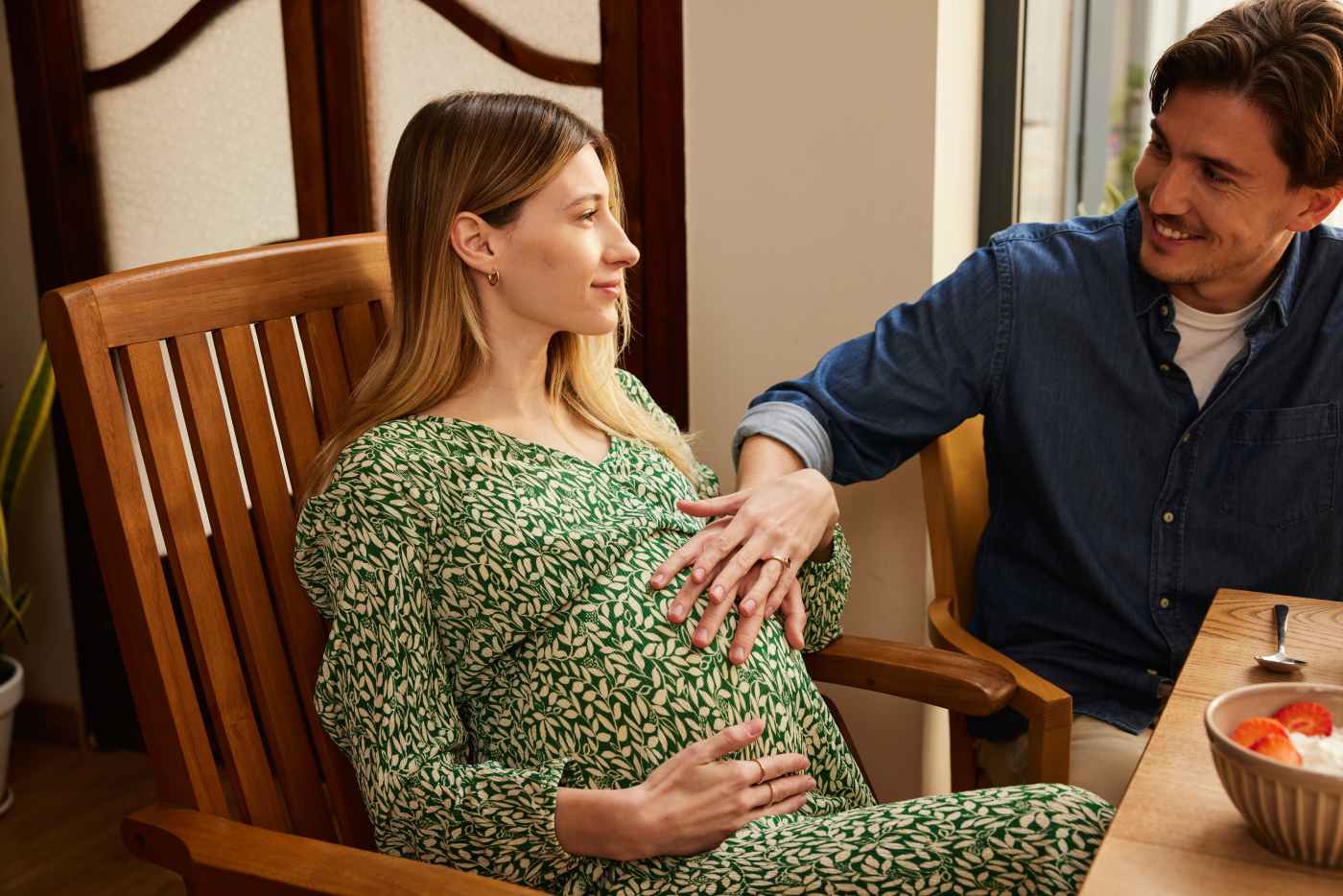
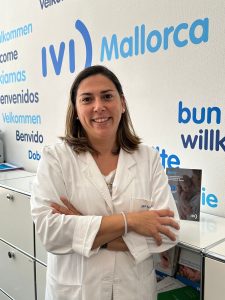
Assisted reproduction has the objective of helping some women to become mothers. It is a fact, just as it is that some must resort to treatments with donated eggs. And luckily these treatments with donated gametes or embryos are less and less taboo in our society. Therefore, on the occasion of the International Day of Families we want to talk about egg donation as a way to achieve motherhood. For this we have asked for help from Dr. Catalina Roig, IVI Mallorca egg donation coordinator.
Types of patients who resort to egg donation
Let’s start by talking about the types of patient or, rather, the most common types of diagnosis that lead to egg donation. Mainly women of advanced age, as a result of which the number and quantity of the ovules has worsened. But what do we consider advanced maternal age? From the age of 35, which is when this decline begins to take place. But also patients with repeated failures in in vitro fertilization, with early ovarian failure or who have undergone ovarian surgery. Lastly, there are also those whose ovules have a poor basic quality, due to hereditary diseases or having had to undergo radiotherapy or chemotherapy treatment, which affect fertility.
Being a mother with donated eggs: a gift of science
The important message that we must keep is that thanks to egg donation these women can be mothers. On many occasions the eggs will be from the donor and the sperm from her partner. But it can also happen that the semen is also from a donor, in cases where the couple also presents fertility problems, in couples of women or in a woman who faces motherhood alone.
When we raised the possibility of trying a egg donation pregnancy, what we find in consultation as a first reaction is a great fear of the unknown. But more and more women and couples are coming because they know women or families who talk about it naturally and that helps a lot to break the stigma of everything that surrounds being a mother thanks to oocyte donation. Proof of this is that more than 30% of our patients manage to become mothers through this option.
Genetics and epigenetics
The top priority of the expectant mother will always be that her baby is born healthy. But, in addition, in the case of mothers through egg donation, the concern of whether the future son or daughter will resemble them is added. To do this, at IVI we use the latest facial recognition technology. We have the Perfect Match 360º technology that allows us to guarantee both the medical compatibility between donor and patient, but also that the physical and biometric resemblance is the maximum possible. And what do we take into account for it? On the one hand, the phenotypic characteristics: ethnicity, eye and hair color, height, complexion… In addition to other aspects such as Rh compatibility and blood group. On the other hand, we carry out the genetic compatibility test between the donor and the recipient couple, through the Biometric Scan of 3D facial resemblance. It is a software that helps us determine the degree of resemblance between donor and patient. With all these results we choose the most suitable donor. In addition to the genetic load of the donor, epigenetics must be taken into account. And it has been shown that this is modulable in the uterine environment, during the time of gestation.
Anonymity in egg donation
The donation of gametes, both ovules and semen, is 100% and this is established by law. However, there are recipient women or couples who are curious about details that go beyond the clinical safety of the process. We always provide very important information such as the blood group. In the event that the patient wants to know more details, she can also know the age of the donor and more about her physical characteristics.
Tests performed on donors
One of our main maxims at IVI is the safety of our patients, in this case both recipients and donors. Therefore, in order to ensure that the strictest criteria are met at the medical level, only donors who complete all the tests of the selection process are admitted. In this sense, although the process is 100% anonymous, it is also traceable from start to finish. Analysis, genetic tests or mental health evaluation are just some of the tests we perform.
Interview to know personal and family history
For example, people who are at high risk of transmitting a disease to their offspring cannot be donors.
Other tests
In order to both assess and counsel donor candidates, we conducted an interview to assess mental health. On the other hand, we carry out a complete gynecological evaluation, as well as genetic tests, karyotype and screening test for monogenic diseases. The latter is a test that allows us to identify the presence of genes that cause diseases that can be transmitted to offspring.
What does the treatment consist of for recipient women?
Once we have chosen the donor, we begin with stimulation for the recipient patient, while the embryo is fertilized in the laboratory. Once achieved, the embryo transfer of the one that presents the best characteristics is carried out. Finally, 11 days after the embryo transfer, the pregnancy test is performed. It should be noted that assisted reproduction treatments with donated eggs have an average success rate of over 83% with just one attempt, reaching practically 100% in the second and third.
Mother by egg donation? Better in IVI
Naps looking for pregnancy and it doesn’t come, at IVI we can help you. We offer assisted reproductive techniques, such as egg donation, and have the highest success rates on the market. You can contact us by calling 900847300 or through the form to make an appointment at IVI. We have more than 30 years of experience leading the field of reproductive medicine and we have more than 30 clinics in Spain.


