


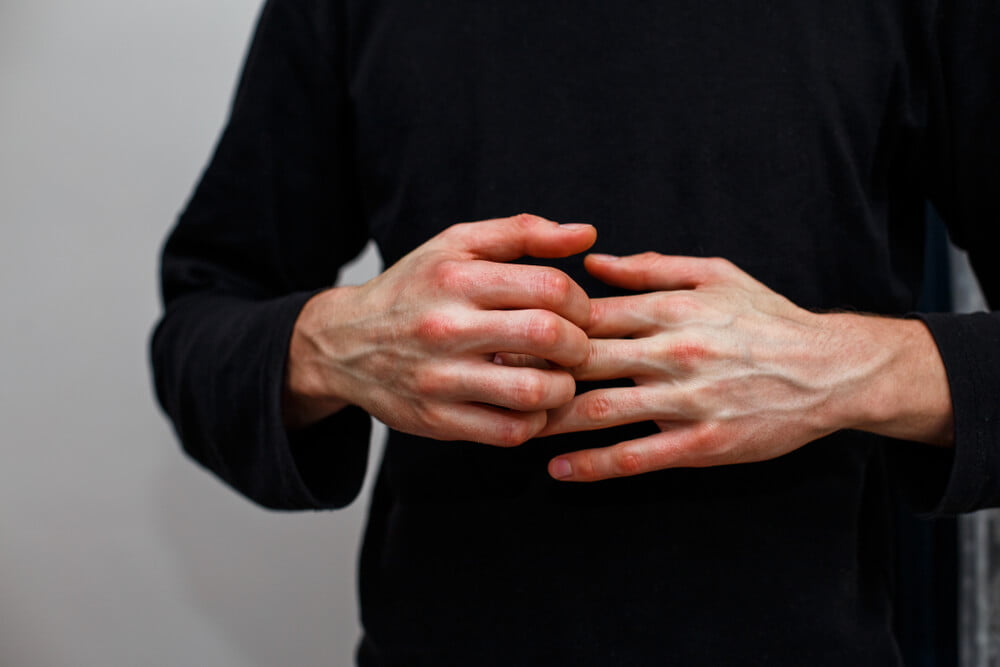
Generalized (common) pustular psoriasis (GPP) is a serious skin disease called psoriasis, a rare form of psoriasis, GPP and other psoriasis are caused by abnormal inflammation. Pustular Psoriasis Pustular [PUHS-choo-lar] psoriasis is characterized by white pustules (non-infectious pus blisters) surrounded by red skin. The pus is made up of white blood cells. This is not an infection and is not contagious. It may be limited to certain areas of the body – for example, the hands and feet. Generalized (common) pustular psoriasis (GPP) can also cover most of the body. It tends to go into a cycle with reddening of the skin followed by pustules and scaling.
Inflammation is a normal immune system response to injury and foreign invaders (such as bacteria). However, when inflammation is abnormal and uncontrolled, it can damage the body’s tissues and organs. Individuals with GPP have successive episodes where skin areas become red and inflamed and develop pus-filled blisters (pustules). Skin problems are accompanied by fever, sometimes pain, extreme tiredness (fatigue), muscle weakness, increased numbers of white blood cells and other signs of inflammation in the body (systemic inflammation).
Inflammation problems subside and recur frequently. Although the trigger is often unknown, episodes can be triggered by infection, exposure to certain medications, menstruation, or pregnancy. GPP can be life-threatening if left untreated. Psoriasis vulgaris is the most common form of psoriasis. Lesions are mostly seen in areas such as knees, elbows and scalp. Psoriasis can also settle on the nails and even only appear on the nails. Inverse psoriasis type psoriasis; It is limited to fold areas such as armpits, groin, and under the breast. Since these areas have the property of being moist, it is seen that psoriasis cause redness and swelling without dandruff. Fungal infections can trigger this type of psoriasis.
While there are many GPPs alone (GPPs only), some improve the characteristics of another skin condition called psoriasis vulgaris (PV) before or after GPP appears. PV, the most common form of psoriasis, is characterized by red, scaly patches of skin (plaques) on some parts of the body. Psoriasis may be worse in people with compromised immune systems, including people with HIV / AIDS. Some people with psoriasis have arthritis (psoriatic arthritis). If psoriatic arthritis is accompanied by spills, the diagnosis can be made easily. It is more difficult to diagnose patients with joint involvement alone. Additionally, people with psoriasis have a higher risk of cardiovascular disorders such as fatty liver disease, heart disease, and stroke.
It is quite common for people with some types of psoriasis to show symptoms of depression. The reason for this is that the ugly appearance of the wounds attracts the attention of other people and this situation harms the self-esteem of the person.
Genetic Changes / Factors
Mutations in many genes, including IL36RN and CARD14, increase the risk of developing GPP. These two genes specifically provide instructions for making proteins that play a role in regulating inflammation in the skin.
The IL-36Ra protein produced from the IL36RN gene blocks the activity of specific proteins that trigger signaling pathways to promote skin inflammation. IL36RN gene mutations involved in GPP reduce the amount of IL-36Ra protein in the skin. When not controlled by IL-36Ra, the signaling pathways that promote inflammation are overactive.
Conversely, the CARD14 protein normally turns on the inflammatory signal. CARD14 gene mutations associated with GPP increase the activity of the CARD14 protein, leading to uncontrolled inflammatory signals in the skin. Strengthening these signaling pathways results in abnormal inflammatory reactions that contribute to skin problems and the systemic inflammatory properties of GPP.
IL36RN gene mutations are most often associated with GPP alone and are rarely found in people with only PV (psoriasis vulgaris). Mutations in this gene appear to be the most common genetic risk factor for GPP alone. CARD14 gene mutations are found more frequently in people with both GPP and PV, but changes in this gene have also been found only in people with GPP.
Many people with GPP do not have a mutation in the IL36RN or CARD14 gene. Mutations in other genes, some of which have not been identified, may also be associated with the condition. Having a gene mutation in one of the associated genes does not mean that an individual will have GPP. Researchers suspect that environmental or other genetic factors are helpful in determining whether an individual will develop the condition.
Signs and Symptoms
Psoriasis is a skin disease that causes skin rash, silvery scales, and irritation. Most psoriasis patients have thick, red, well-defined patches of skin with flaky, silvery-white scales. The skin becomes blotchy in the form of red bumps covered with shiny scales. This is called plaque psoriasis.
Psoriasis is common, but most often begins between the ages of 15 and 35 or as people age.
The causes of psoriasis are still unknown. In a healthy person, skin cells mature in 28-30 days. In psoriasis patients, this period can be reduced to 3-4 days. Rapidly proliferating cells accumulate on the skin, causing dandruff (bright scaly plaques) to form.
The following may cause psoriasis flare-ups or make treatment difficult:
Skin infections caused by bacterial or viral infections, including throat and upper respiratory tract infections,
Dry air or dry skin
Skin injuries, including cuts, burns, insect bites and other skin rashes
⁃ Including antimalaria drugs, beta blockers and lithium some medications
⁃ Stress, smoking and excessive alcohol consumption,
⁃ Too little sunlight
⁃ Too much sunlight (sunburn)
Some types of psoriasis are very slow-growing:
Erythrodermic psoriasis causes all skin on the body to become red and scaly. This form of psoriasis is seriously dangerous because it eliminates the ability of the skin to act as a protective barrier against injury and infections, like a burn. It is the least common type.
Pustular psoriasis is another rare form of psoriasis. In this form, large and small pus-filled blisters (pustules) spread widely throughout the body.
Palmoplantar psoriasis is a form of acne psoriasis in which pustules occur primarily on the hands and feet. Sometimes referred to as palmoplantar psoriasis of the palms and soles.
Acropustulosis (Hallopeau’s Acrodermatitis Persistence) is a rare form of psoriasis characterized by skin lesions on the toes and sometimes toes. Eruption sometimes begins after injury to the skin or infection. Lesions can be painful and disabling and cause deformity of the nails. Sometimes bone changes are seen in severe cases.
Von Zumbusch can appear suddenly on the skin. It is characterized by widespread areas of reddened skin that become painful and sensitive. Pustules appear within hours. After 24-48 hours, the pustules dry, leaving the skin glazed and smooth. Children rarely develop Von Zumbusch pustular psoriasis, but when this happens they usually have the first flare-up of psoriasis and may have a better outcome than adults.
This form can be life-threatening and requires immediate medical attention. Patients with von Zumbusch pustular psoriasis should generally be hospitalized for rehydration and initiated topical and systemic therapy, typically antibiotics. Von Zumbusch is associated with fever, chills, severe itching, dehydration, rapid heart rate, weakness, anemia, weight loss, and muscle weakness.
Genetic Incidence
GPP is the rare form of psoriasis. Although the prevalence of GPP worldwide is unknown, the condition is estimated to affect 2 people per million in Europe. It is also seen in approximately 600 thousand people each year in Japan. It occurs in about 2% of the world’s population. This disease, which can appear at any age, may appear and disappear unexpectedly. Psoriasis; In some patients, it lasts a few months or a few years, while in some patients it may be intermittent for a lifetime.
The most important risk factor shown for psoriasis is genetic effects. It has been determined that people with psoriasis in their family history are much more prone to this disease.
Generalized pustular psoriasis is a life-threatening, severe inflammatory skin disease characterized by recurrent periods of high fever, fatigue, episodic erythematous skin eruption with the formation of sterile cutaneous pustules and neutrophil leukocytosis in various parts of the body.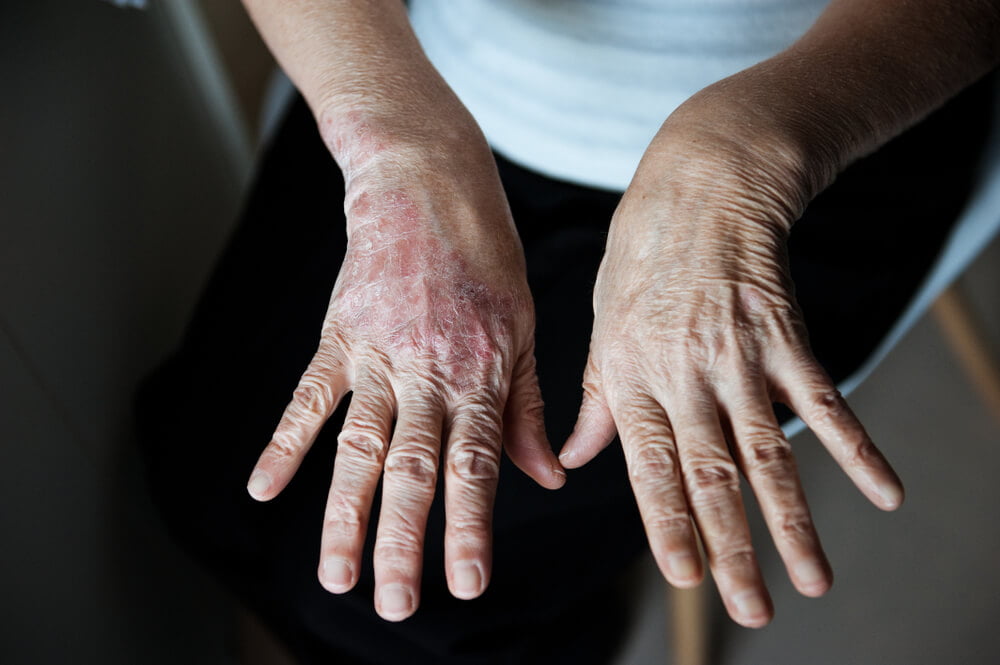
Inheritance Pattern / Pattern
When associated with IL36RN gene mutations, the risk of GPP is typically inherited in an autosomal recessive pattern, meaning that both copies of the gene in each cell have mutations. Each of the parents of an individual with an autosomal recessive disease carries a copy of the mutated gene.
When associated with CARD14 gene mutations, the risk of GPP is inherited in an autosomal dominant pattern; This means that one copy of the altered gene in each cell is sufficient to increase the risk of the disorder. In some cases, an affected person inherits the mutation to a parent. Other situations are due to new (de novo) mutations in the gene.
People with mutations in the IL36RN or CARD14 gene inherit an increased risk of GPP, not in the condition itself. Not all people with this condition have mutations in one of these genes, and not all people with a mutation in one of these genes will develop the disorder.
Diagnostic Methods and Treatment
Sometimes a skin biopsy
⁃ Doctors define the diagnosis of psoriasis based on how the surface of the skin and plaques appear and where they appear in the body.
Sometimes doctors take a sample of skin tissue and examine it under a microscope to predict other diseases (such as skin cancer).
Types of Treatment
Topical drugs, Phototherapy, Immunosuppressants and Other drugs.
There are many medications available to treat psoriasis. Often, a combination of drugs is used depending on the severity and extent of the person’s symptoms. As a new method applied recently; Local light therapy is used in psoriasis. It is applied only to the nacreous area and thus it is aimed to eliminate the side effects that will occur in other skin areas. Most of the patients are resistant to treatment, but few have psoriasis. The light used in these patients is ultraviolet B. This system is effective in many patients and successful results are obtained. When medication or cream treatment is applied and discontinued, the disease reappears.
In common pustular psoriasis, the aim of the treatment is to prevent infection and fluid loss, balance the body’s temperature, and maintain the chemical balance of the skin. TNF-alpha blockers such as acitretin, cyclosporine, methotrexate, oral PUVA (the light-sensitizing drug psoralen plus ultraviolet light A) and infliximab are prescribed. In local light therapy, ultraviolet B is given to the psoriasis area for a few minutes. It is a method that does not require medication, but it is sometimes applied with creams or oral medications to accelerate healing. Although the number of sessions varies from person to person, it is applied approximately 8-10 times. Although there is redness on the application areas after the treatment, the patient continues his normal life. It is a method widely used in Europe in recent years.
Psoriasis Patients Should Be Considered During Treatment:
- People with psoriasis should first get rid of psychological triggers. Getting away from negative emotions such as stress, sadness, anxiety; It will be a positive development for the treatment to focus on things that make them feel better.
- Since scratching the skin, rubbing and tearing off the crusts may cause new rashes, it is necessary to avoid them as much as possible.
- The sun and the sea have a reducing effect on psoriasis. The sun exposure time should be controlled as much as possible. Sunbathing enough to burn can increase psoriasis rashes.
- During the winter months, the moisture content of the leather decreases and causes it to become drier. Since dry skin will cause more itching in psoriasis patients, moisturizing creams and lotions should be used more carefully in winter.
- Bathing every day will help soothe your skin. Other names DISEASES: • acute generalized pustular psoriasis
⁃ acute generalized pustular psoriasis
• Interleukin-36 receptor antagonist deficiency
⁃ Interleukin-36 receptor deficiency of antagonist
• DITRE
• Generalized pustular psoriasis of von Zumbusch
⁃ von Zumbusch the generalized pustular psoriasis
• GPP
• Von Zumbusch psoriasis


