


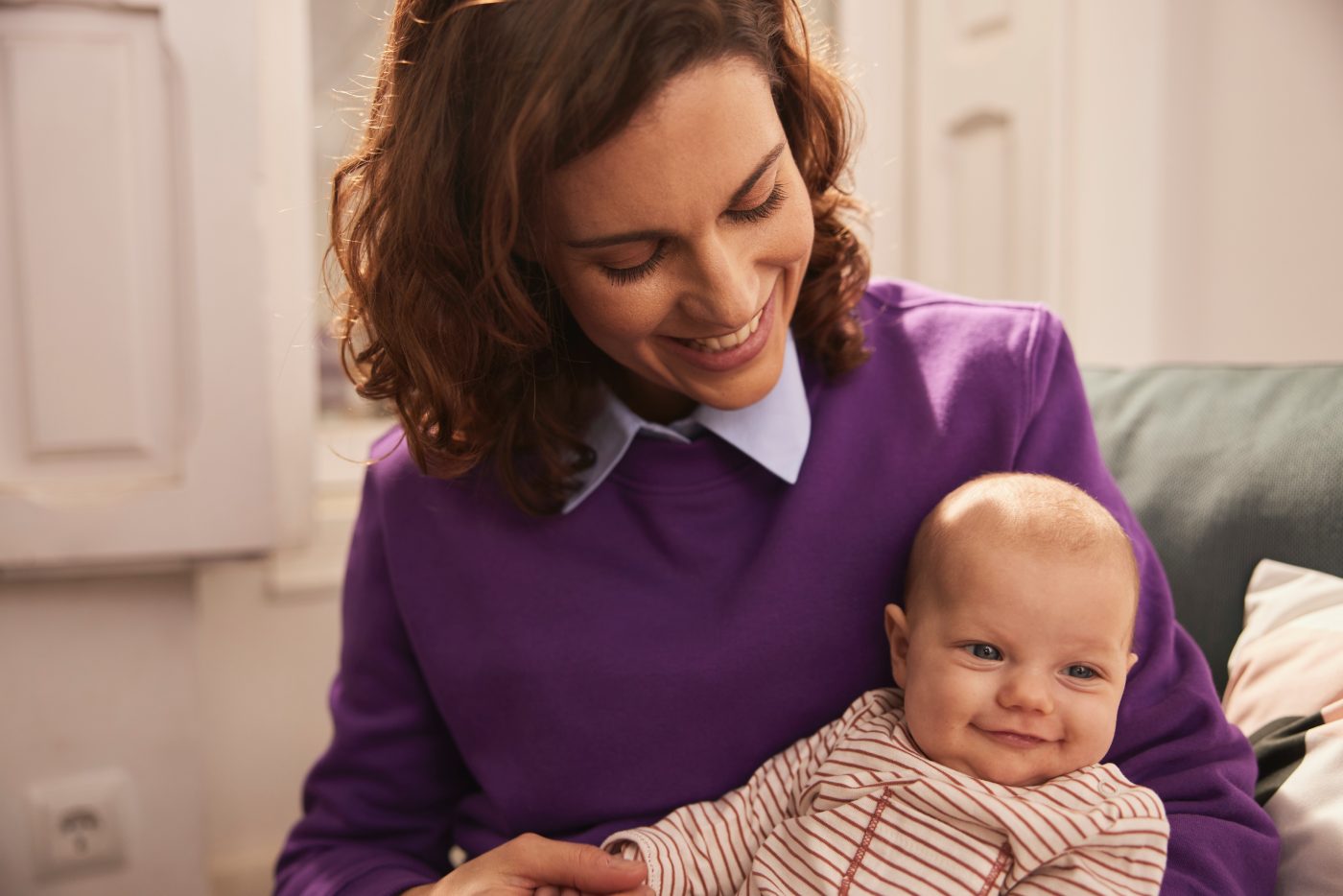
Until not many years ago, the woman who opted for motherhood alone faced prejudices and conventionalities. Fortunately, single mothers as a family model are no longer seen by the majority as something unusual and transgressive. In general, these no longer new family models are consolidated and represent an important part of society in many countries.
Increase in single mothers by choice in the last 5 years
Specifically, single mothers by choice have been on the rise for the last five years. And it is that in this period the treatments to this type of patients have increased by 66%. 15% of our patients in the last five years are single mothers and last year, 1 in 5 patients corresponded to this typology.
“This is an increasingly common reality among women who are very clear that they want to start a family and do not want to wait for the perfect moment or depend on a partner for it. To get an idea of this scenario, in 2017, at IVI, women who chose to be single mothers already represented almost 12%. This figure last year increased to 20% of the total number of treatments carried out in our clinics in Spain (among single women, homosexuals and heterosexual couples). We are facing a social trend that increases exponentially year after year. In the case of IVI, treatments for single women have increased by 66% in the last five years. This figure is, to say the least, surprising.comments Dr. Antonio Requena, Medical Director of IVI.
Different Assisted Reproduction treatments for single mothers by choice
Women who decide to face motherhood alone have different assisted reproduction techniques. The choice will be made jointly with the professional who handles your case, depending on her profile and medical history. These treatments range from artificial insemination or in vitro fertilization with donor sperm, to the donation of both gametes (eggs and sperm) or the transfer of pre-embryos donated by other couples.
“Our experience shows us women who are clear that motherhood does not necessarily have to depend on having a partner. They come with the decision made: nothing and no one stops their desire to be mothers. They want to know what possibilities they have to achieve it and what personalized treatments we can offer them, since many of them come after the age of 35, when fertility drops significantly”explains Dr. Requena.
Self-chosen single mother patient profile
Women who usually start this process are usually between 35 and 40 years old. They have achieved job and financial stability, in addition to having an emotional maturity that has led them to make the firm decision to form their own family in this way. Women who want to be single mothers by choice have already achieved their main life goals, but they still have one very important one pending for them: to be mothers.
Single motherhood from an emotional point of view
As we have said, making the decision to form a single-parent family implies great emotional maturity. It is a brave decision, which requires self-confidence and stability, but this does not mean that doubts and fears do not appear. It is a challenge and an important change in the life of the patient, which implies a great responsibility. Aware of this reality, at IVI we not only help you by offering you Assisted Reproduction techniques and treatments. For us, taking care of the psychological aspect is just as important and that is why we created the guide The best decisionto resolve all the doubts that may arise in this process.
Spanish cities with the highest increase in single mothers by choice
If we geographically analyze the data in our more than 30 clinics in Spain, the three cities that have most increased treatments for women without a partner are Ibiza, Malaga and Almería. These, followed by Mallorca, Las Palmas, Vigo, Madrid and Valencia.
“Reproductive medicine plays an essential role in this increasingly frequent change in social trends. Added to this is the fact that many foreign women come to Spain to fulfill their reproductive desire, both because of the quality of our professionals and because of a more advanced legal framework than that of their countries of origin”concludes Dr. Requena.


