


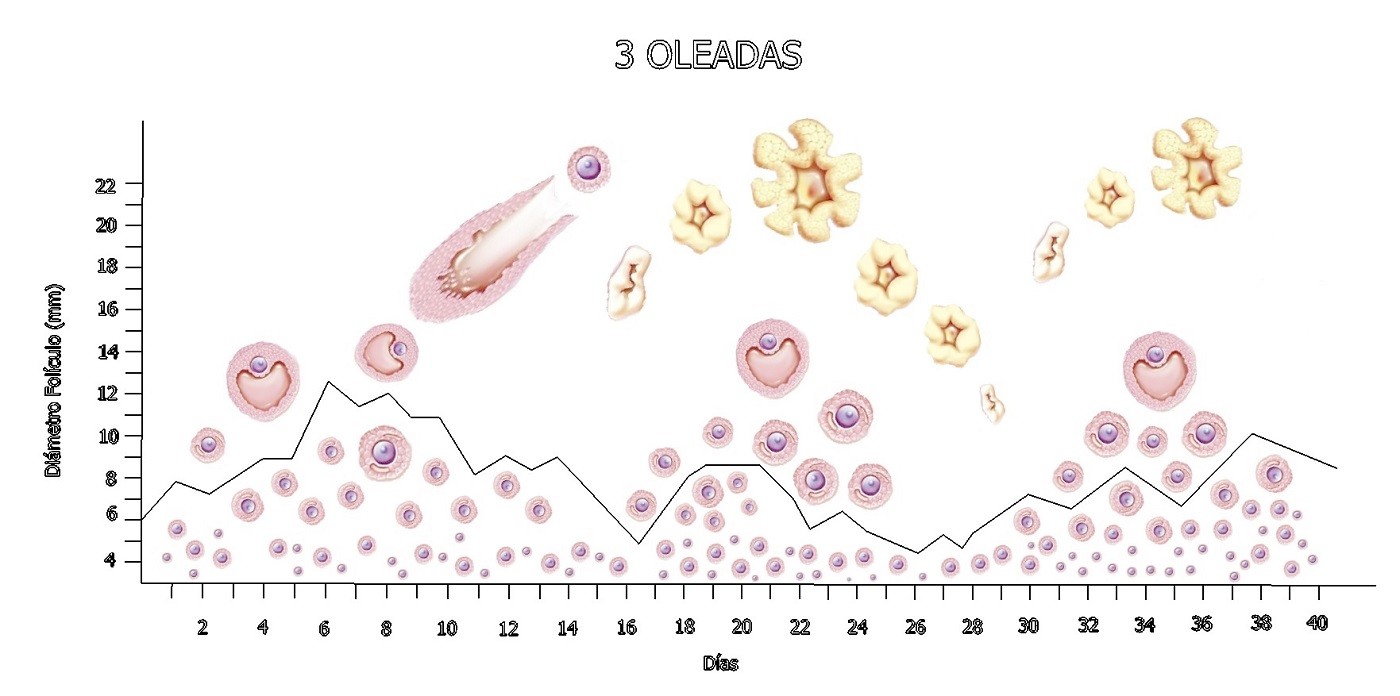
As you know, time plays against women who want to be mothers. Now, from IVI we are once again winning the battle against time, this time thanks to the DuoStim strategy. It is a protocol based on carrying out two consecutive stimulations, without waiting for menstruation. For this reason, it is positioned as one of the main tools for suboptimal patients who, given their characteristics, need to accumulate embryos to carry out a preimplantation genetic diagnosis.
What is the DuoStim protocol?
The DuoStim protocol consists of performing two consecutive stimulations, the second after the puncture of the first, without waiting for menstruation. Dr. María Cerrillo, gynecologist at IVI Madrid, presented yesterday at the annual Congress of the European Society for Human Reproduction and Embryology (ESHRE) the work titled “The DuoStim strategy shortens the time to obtain an euploid embryo in poor prognosis patients: a non-inferiority randomized controlled trial”. It is an alternative for low responding patients, given its characteristics. They need to accumulate a greater number of oocytes and, subsequently, embryos, in the shortest possible time, to carry out a preimplantation genetic diagnosis of them (PGT-A). In those cases of patients with complicated prognoses, it is essential to optimize the times for obtaining oocytes and embryos, in order to achieve a healthy baby.
“The idea of the DuoStim arises from verifying that oocytes obtained in phases other than the follicular one are equally useful and viable. The literature already contained studies and data regarding the performance of two consecutive stimulations in certain patients. But we are the first to make the comparison of two stimulations in the same cycle versus two delayed stimulations. The conclusion of this is that the patients stimulated by DuoStim managed to reduce the time taken to obtain a healthy embryo to transfer by almost half and, therefore, a greater probability of reducing the time to achieve a pregnancy “explains Dr. Cerrillo.
Previous study carried out for the development of the DuoStim protocol
For this work, 80 patients were used, with an age greater than 38 years and whose characteristics indicate the performance of a PGT-A. The patients were divided into two groups: one with the DuoStim protocol and the other with two delayed stimulations. In the end, after some exclusions, a sample of 27 patients remained in each group. “When comparing the results of both groups, it was found that there was no variation in the days on which the two stimulations were carried out, nor in the number of healthy oocytes or embryos obtained. The main difference was found in the number of days it took to get a healthy embryo. In those patients in the DuoStim group, the time required to achieve a euploid embryo was 23.3 days, compared to 44.1 days in the group of patients with delayed conventional stimulations “adds Dr. Cerrillo.
Conclusions and future expectations of the DuoStim
On the gynecological aspect, the study raised three common questions: how to perform the maturation of the oocytes to schedule the puncture, whether it is necessary to leave the smaller oocytes without extracting at the time of performing the first puncture and how long it is necessary to wait between the 1st puncture and the 2nd stimulation. The answer to the last question, in the case of IVI, is to wait five days to start the second stimulation after the puncture.
The characteristics of the patients, regardless of the group in which they were located, were similar: older than 38 years, 0.92 mean AMH, BMI and similar antral follicle count. Based on this, the differences in the cycles between patients in both groups were also similar: gonadotropin dose, days of stimulation, fertilization rate, blastocyst, implantation, pregnancy, etc. The only thing that was different was the time it took to get a healthy embryo –euploid–, where the times were cut almost in half.
“DuoStim is positioned as a fundamental tool for patients with the need to accumulate oocytes, who need to have and accumulate the largest number of healthy embryos in order to carry out a preimplantation genetic diagnosis. Sub-optimal patients, also known as low responders, of a certain profile and with whom we would be saving valuable time that, sometimes, they do not have “, concludes Dr. Cerrillo.


