



Human Papilloma Virus (HPV) infection is among the most common sexually transmitted diseases.
Human Papilloma Virus (HPV) infection is among the most common sexually transmitted diseases and causes cervix cancer, which is the 4th most common cancer in women. The infection often progresses without any symptoms, and if it cannot be eliminated by the body, it can quietly lead to cervical cancer over the years. Studies show that approximately 80 percent of societies are at risk of encountering HPV infection at some time in their lives. There are vaccines with 100% protection against HPV Type 16 and 18 infections, which are the cause of the vast majority of cervical cancers.
What is the Human Papilloma Virus (HPV)?
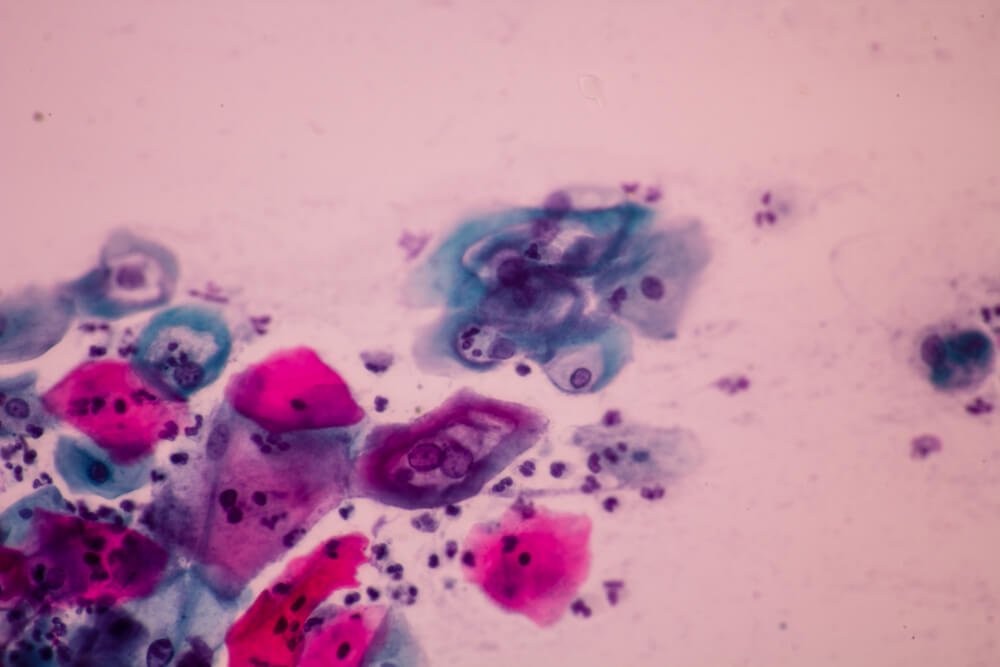
It is a double-stranded DNA virus that often involves the genital area, causing infection in both men and women (Figure). It was first stated by Harald zur Hausen in 1970s that HPV can cause genital cancers, and then HPV DNA sequences were shown in cervical cancer cells. A small part of HPV, which has more than two hundred types, causes changes in cells. In general, HPV types that cause infection are divided into low and high risk HPVs according to their susceptibility to cancer.
- Low-risk HPVs: The most common low-risk HPV types are 6, 11, 40, 42, 43, 44, 54, 61, 70, 72, 81.
- High-risk HPVs: The most common high-risk HPV types that cause cancer are 16, 18, 31, 33, 35, 39, 45, 51, 52, 56, 58, 59, 66 and 68. Among these, Types 16 and 18 are the types that cause the most cervical cancer.
How is the HPV virus transmitted?
The virus is mainly sexually transmitted, but full sexual intercourse is not required for transmission. Skin or mucosal contact is sufficient for contamination. In this context, the virus can be passed from person to person in case of contact with the penis, scrotum, male ovarian bag, vagina or external genital area of the infected person. Researches; It reveals that the virus is not transmitted by the use of common towels, clothing and bedding or contact with inanimate surfaces such as closets and door handles. Likewise, there is no clear evidence that the virus is transmitted by kissing. It should be kept in mind that the spread of the virus will continue, even if there are no symptoms for a long time in infected people.
Does the use of condoms prevent transmission of HPV virus during sexual intercourse?
HPV virus transmission mainly occurs during sexual intercourse. Therefore, the use of condoms significantly reduces the risk of contamination. However, as stated, contact with skin and / or mucosa is sufficient for virus transmission. In this context, the condom, which prevents only penis-vagina contact directly, cannot completely prevent the risk of contamination of the virus since it cannot prevent other sexual contact.
How does HPV infection show symptoms?
HPV virus may not cause any symptoms. The most common symptom; They are warts that appear 2-6 months after infection. Genital warts in women; in the vulva, vagina, cervix and / or anus, in men; It can be seen as flat lesions, small stalks or cauliflower-like protrusions and swelling in the penis, scrotum and / or anus. The women in HPV type that most frequently causes these lesions in the genital area; HPV 6 and 11 are low risk. In addition, high-risk HPVs can continue to live in cells without causing any obvious symptoms and can cause cancers in the cervix, vagina, vulva, penis and oropharynx by causing precancerous changes in the cells over the years. The important point here is to know that not every HPV infection becomes cancerous and if cancer does occur, it will take many years.
What are the factors that prevent spontaneous regression and spread of HPV infection?
In approximately 90 percent of women in HPV-infected cases, the virus regresses spontaneously within 2 years. The factors that cause the virus to continue to spread by preventing spontaneous regression can be listed as follows:
- Weakening of the immune system
- Chemotherapy and radiotherapy treatments
- Smoking
- Frequently recurrent genital diseases other than HPV
- Traumas
- Long-term use of steroid-type drugs that can cause the immune system to weaken
- Insomnia, tiredness
- Pregnancy
- Folate and / or beta carotene deficiency

What are the diagnostic and diagnostic methods of HPV virus?
If there is no part from the warts detected during the gynecological examination or if there is no such lesion, the diagnosis can be made by taking a swab from the vaginal or cervical discharge and examining the DNA of the HPV virus in the samples taken. In this way, HPV virus typing can also be performed and a high-risk HPV presence can be determined. If there is high-risk HPV positivity, it is important to consult an experienced Gynecology and Obstetrician for further examination and treatment. In addition, HPV infection can be determined by detecting cellular changes that may be caused by the HPV virus in the cervical Pap Smear test taken. Considering the possibility of HPV infection to be asymptomatic, the importance of regular HPV test and / or cervical Pap Smear test should be known to be able to diagnose cervical cancer before it progresses and to take the necessary precautions. According to the national cancer screening standards in our country; Every women in the 30-65 age group is screened every 5 years with women in HPV and Pap Smear tests.
How is treatment done in HPV infection?
Today, there is no drug treatment that completely eliminates the HPV virus. It should be known that at least 80 percent of healthy individuals with normal immune systems will clear this virus from the body. In the treatment of HPV infection, specific treatment planning is made for the lesions caused by the virus. If the virus has caused the warts called genital conduloma, surgical removal of these warts, burning with the help of electrocautery, freezing with cryotherapy, treatment with medication or some special chemical agents can be planned. If cancer precursor lesions occur in the patient’s vulva, vagina or cervix, follow-up for these lesions and, if necessary, the surgical treatment algorithm should be planned without wasting time.
What should be considered in order to avoid HPV infection?
Since HPV infection is mainly transmitted by sexual intercourse and contact, every sexually active individual carries a risk in terms of HPV infection. The use of condoms that prevent penile and vaginal contact reduces the risk of infection, but unfortunately it does not protect it completely. From this point of view, the best approach to protection is not to experience sexuality with people who are at risk for sexual infection. Again, the fact that our sexual partners are mutually exclusive will minimize the possibility of contamination. Today, there are vaccines that provide nearly 100% protection against HPV types that most commonly cause genital warts and cervical / vulva-vaginal cancers.
Does HPV vaccine protect from HPV infection? At what age and how should HPV vaccine be administered?
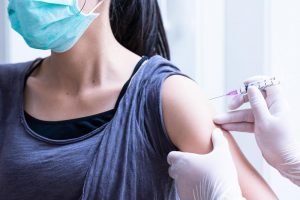
There are 3 different HPV vaccines in use today. These:
- Bivalan, or 2-HPV vaccine: Vaccine for high-risk HPV Types 16 and 18, which is the cause of approximately 70% of cervical cancers.
- Quadrivalent or quadrivalent HPV vaccine: Vaccine for low-risk HPV Types 6 and 11 and HPV Types 16 and 18, which most often cause genital warts, namely condylomas.
- Non-viable, 9-HPV vaccine: HPV Type 6, 11, 16, 18, 31, 33, 45, 52, 58 vaccine
There are 2 and 4 vaccines in our country, but there is no 9 vaccine yet. Recommended application age for HPV vaccines; It is the age range of 9-14, where sexual intercourse does not begin and the best immune response will be obtained against the vaccine. Based on current evidence, the optimal age for vaccination has been determined as 11-12 for both boys and girls, and catch-up vaccination is recommended until the age of 26 (15-26 age range). Studies indicate that two doses of the vaccine will be sufficient, since the immune response will be more active in individuals under the age of 15. HPV vaccines, which are approved by the US Food and Drug Administration (US FDA) for both men and women up to the age of 45, are recommended to be administered in 3 doses for individuals over 15 years of age.
Before sexual intercourse begins, it should be known that nearly 100% protection will be provided against the HPV type and the infection that the vaccine contains with HPV vaccines at the appropriate age range and dose. However, considering that there are more than 200 HPV types, it should be kept in mind that protection against all HPV infections cannot be provided with existing vaccines.
Indication and application details for all three vaccines are in the table below.
| Bivalan Vaccine (2’s) | Quadrivalent Vaccine (4 in 1) | Nonavalan Vaccine (9 Pieces) | |
| HPV Type | 16, 18 | 6, 11, 16, 18 | 6, 11, 16, 18, 31, 33, 45, 52, 58 |
| Approved indications | For women aged 10-25 for precancerous lesions and cancer prevention | For women between the ages of 9-26 to protect from cervical, vaginal, vulvar and anal precancerous lesions and cancers, genital warts
To protect against anal precancerous lesions and cancer, genital warts in men aged 9-26 years |
For women between the ages of 9-26 to protect from cervical, vaginal, vulvar and anal precancerous lesions and cancers, genital warts
To protect against anal precancerous lesions and cancer, genital warts in men aged 9-26 years |
| Recommended vaccination age and dose | Women: Recommended routine vaccination age is 11-12 (2 doses), compensatory vaccination age is 15-26 (3 doses) [For every 3 vaccines]
Males: Recommended routine vaccination age is 11-12 (2 doses), compensatory vaccination age is 15-26 (3 doses) [for 4 & 9 vaccine] 2 doses of vaccination protocol for yaş 14 years old (0- 6-12 months) 2nd dose, minimum 6-12 months after first dose 3 doses of vaccination protocol for> 14 years old (0, 1-2., 6 months) The first to second dose interval should be a minimum of 4 weeks. The second to third dose interval should be a minimum of 12 weeks. The first to third dose interval should be a minimum of 24 weeks. |
||
Who should not be given HPV vaccine ?
Although the US Food and Drug Administration (US FDA) has determined the pregnancy category of HPV vaccine as “B”, today there is a consensus that HPV vaccines should not be applied during pregnancy because there are not enough studies in humans. If the vaccination protocol was started before pregnancy or if the patient became pregnant unknowingly during the vaccination process, it would be appropriate to consult an experienced Gynecology and Obstetrician to reschedule the vaccination schedule. HPV vaccine is not suitable for patients with severe disease. After the disease is over, you can be included in the vaccination calendar with the doctor’s approval. If the patient has an allergenic nature and especially if he / she has an allergy to latex or yeast, the doctor should be informed about the subject and vaccination should be planned under the doctor’s supervision. Again, if a life-threatening allergic reaction developed in the first dose of the vaccine, subsequent doses of the vaccine should not be administered. In nursing mothers, the vaccine can be administered with the advice of a doctor.

Does HPV vaccine benefit those who are sexually active?
There is no concept that HPV infection will be passed on by anyone who is sexually active. In this context, even if the patient is sexually active, if he has not been infected with the HPV types in the vaccine before, he will be protected against these infections that he may have in the future. As a result, vaccination in sexually active individuals will benefit the patient.
Are there any side effects of HPV vaccine?
The most important undesirable effect of the vaccine is the pain, swelling or redness at the application site. Sometimes dizziness and fainting can be seen after the application. Sitting and resting for 15 minutes after the vaccine injection will prevent these side effects. Some patients may experience headache, nausea-vomiting, fatigue or weakness. Although very serious, life-threatening side effects related to the vaccine are almost nonexistent, the records regarding the unwanted effects of vaccines still continue today.
Is it possible to have cervical cancer after HPV vaccine? Is it necessary to have a Pap Smear test after vaccination?
HPV vaccines protect against high-risk HPV Types 16 and 18, which is the cause of about 70 percent of cervical cancer. It should not be forgotten that vaccinated individuals also carry the risk of cervical cancer, as protection cannot be provided against other high-risk HPV types in cancer etiology. For this reason, it is important for these individuals to regularly continue screening for cervical cancer including Pap Smear test.


