


A 22-year-old woman applied due to excessive hair growth and irregular periods on her body. He explains that he had unexpectedly rare periods (5 or 6 times a year). Her hair started to grow black and hard. Complaints increase with weight gain during college years.
What is Polycystic Ovary?
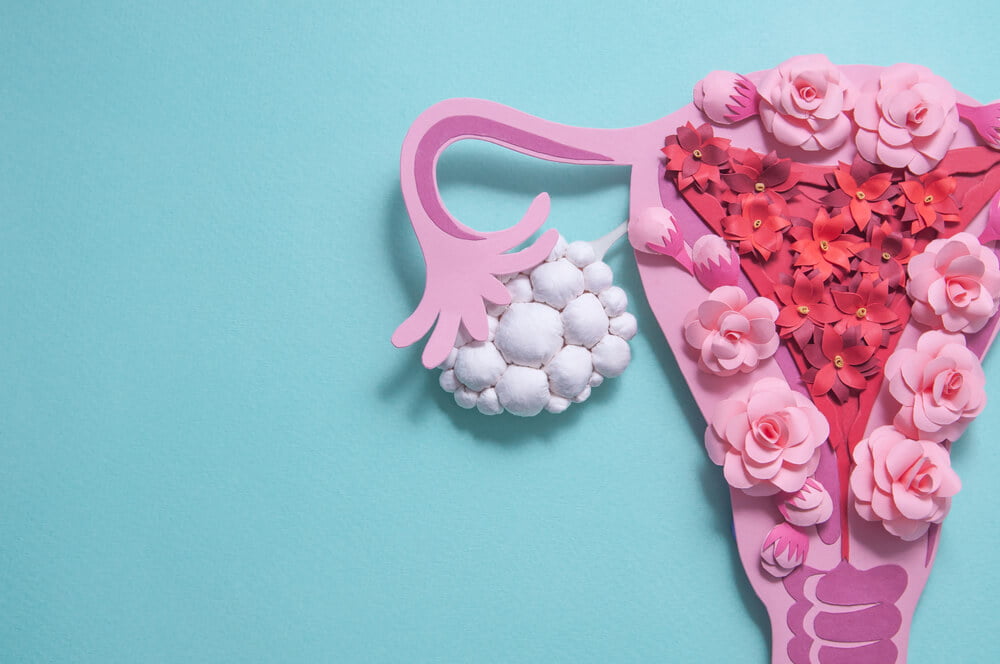
Polycystic Ovary is that the ovary contains many cysts and as a result, women experience hormone imbalance .
The ovary is a female reproductive organ that contains female reproductive cells (eggs). Until puberty, the eggs inside do not mature, and after puberty, the mature eggs are sent to the uterus one by one. This continues until menopause.
The ovaries have 2 main functions:
- In every woman, the small sacs normally found in the ovaries and containing the egg cell mature and crack and leave an egg.
- It secretes two female hormones called folliculin and lutein.
Many diseases, from congenital structural disorders to cancer, can be seen in the ovaries .
A cyst is a formation that is like a closed vesicle or capsule that can be widely observed in the body, and contains a liquid or gaseous substance like oil, water. Cysts are formed in tissues and are found in internal organs, skin surface, anywhere in the body and generally have a good prognosis. While some of the cysts do not show symptoms, others may cause pain. Ovarian cysts, on the other hand, are common occurrences of reproductive age and generally in young women .
Cysts in the ovaries are not seen much in women who have not started menstruation and menopause, as the function of the ovaries begins in adolescence and ends with menopause.
How do Polycystic Ovaries occur?
While these small sacs (follicles) containing the egg cell should be cracked regularly every month, if a malfunction occurs in their development, they remain as cysts in the ovaries. When this situation repeats, the number of uncracked cystic structures in the ovaries increases and Polycystic Ovarian Disease occurs with the accumulation of cysts, which are small in size, in the ovary . Interrupted ovulation increases the number of cysts and as the number of cysts increases, the sensitive hormonal balance of the ovaries deteriorates further and further delays the process.
The most common disorders as a result of hormonal imbalance caused by these multiple cysts ; Excess androgen production, high luteinizing hormone (LH) levels and low follicle-stimulating hormone (FSH) levels. The mechanism for some of these changes is not fully understood. In this case, the ovaries secrete excessive androgen.
Androgen hormone is a group of hormones found in both sexes that play the most important role in the development and growth of the male reproductive system. The most important one in androgen group hormones is the testosterone secreted by the testicles in men. The increase in androgen hormone will bring along a number of problems, which we will define shortly.
Although the cause of Polycystic Ovary Syndrome (PCOS) is not fully understood, there are genetic factors. This disorder is more common in families of individuals with PCOS. The presence of irregular menstruation or diabetes in other women in the family increases the risk of PCOS.
Polycystic Ovary Syndrome is an irregularity characterized by excessive secretion of androgen hormone, malfunction in ovulation, and the ovary’s structurally cystic appearance.
Classical PCOS affects 6% to 10% of women of reproductive age, and can cause significant distress due to androgen excess. Problems such as masculine hair growth, excessive acne (acne) and weight gain can be seen on the body. In addition, Polycystic Ovary Syndrome is the most common cause of infertility due to ovulation problems. This multifactorial disorder also has various environmental effects, such as contributing to obesity. In addition to this, Polycystic Ovary Syndrome; The development of insulin resistance is also linked to problems such as type 2 diabetes, high cholesterol, heart disease and hypertension.
Polycystic Ovary Syndrome manifests itself mostly with abnormal hair growth or menstrual irregularity. Periods are less than 21 days or more than 35 days and are at irregular intervals. It gives symptoms such as acne formation, weight gain, late pregnancy or inability to conceive. The diagnosis is made by ultrasound . With the availability of various treatment options, it has been shown that weight loss has a positive effect on these treatments. Or, weight loss has been observed during the treatment.
(Polycystic Ovaries) PCOS and cancer risk
Ovarian cysts are usually asymptomatic and are detected during routine gynecological examination. Therefore, regular examinations are important. Prolonged exposure to high estrogen hormone due to PCOS results in continuous mitogenic stimulation of the endometrium (uterus), which increases the risk of uterine cancer (by 2.7 times). While the amount of estrogen increases in PCOS, the amount of progesterone decreases. While estrogen triggers the formation of new cells, progesterone enables these cells to mature. Although the relationship between PCOS and ovarian cancer is not very clear, some studies have stated that it increases the risk of ovarian cancer by 2.5 times.
(Polycystic Ovaries) How is PCOS treated?
There are 2 basic logic in its treatment. Since the aim is to prevent the interrupted ovulation process, either ovulation should not be initiated at all or treatments should be applied to complement ovulation. For the first procedure, oral contraceptives, ie birth control pills, can be used because birth control pills will stop the ovulation process before the follicle develops and will protect the uterus. For the second case, certain drug treatments are applied. Drugs are given to regulate the impaired hormonal balance. And with these methods, the cysts in the ovaries decrease over time. However, if the female patient suffering from this disorder wants to have a child, birth control pills will prevent this, so treatment options are planned individually.
While oral contraceptives (birth control pills) take on the main task in drug treatments, they regulate the menstrual cycle and regulate the hormonal balance. In cases where there is no response to treatment with oral contraceptives for 6 months, spironolactone is recommended to be added to the treatment. Oral contraceptives are also recommended in cases where the uterine wall thickens and in cases that may cause cancer, and progesterone hormone is given directly to patients who do not accept this. For women who want to get pregnant, if they have a weight or obesity problem, it is aimed to lose weight first. Metformin, a diabetic drug, may also be preferred in Polycystic Ovary Syndromes due to its relationship with diabetes.
Source, References
1.Christopher R. McCartney, M.D.
Polycystic Ovary Syndrome
N Engl J Med 2016;375:54-64.
DOI: 10.1056/NEJMcp1514916
2.Chittenden BG, Fullerton G, Maheshwari A, Bhattacharya S
Polycystic ovary syndrome and the risk of gynaecological cancer: a systematic review.
Reprod Biomed Online. 2009;19(3):398.


