


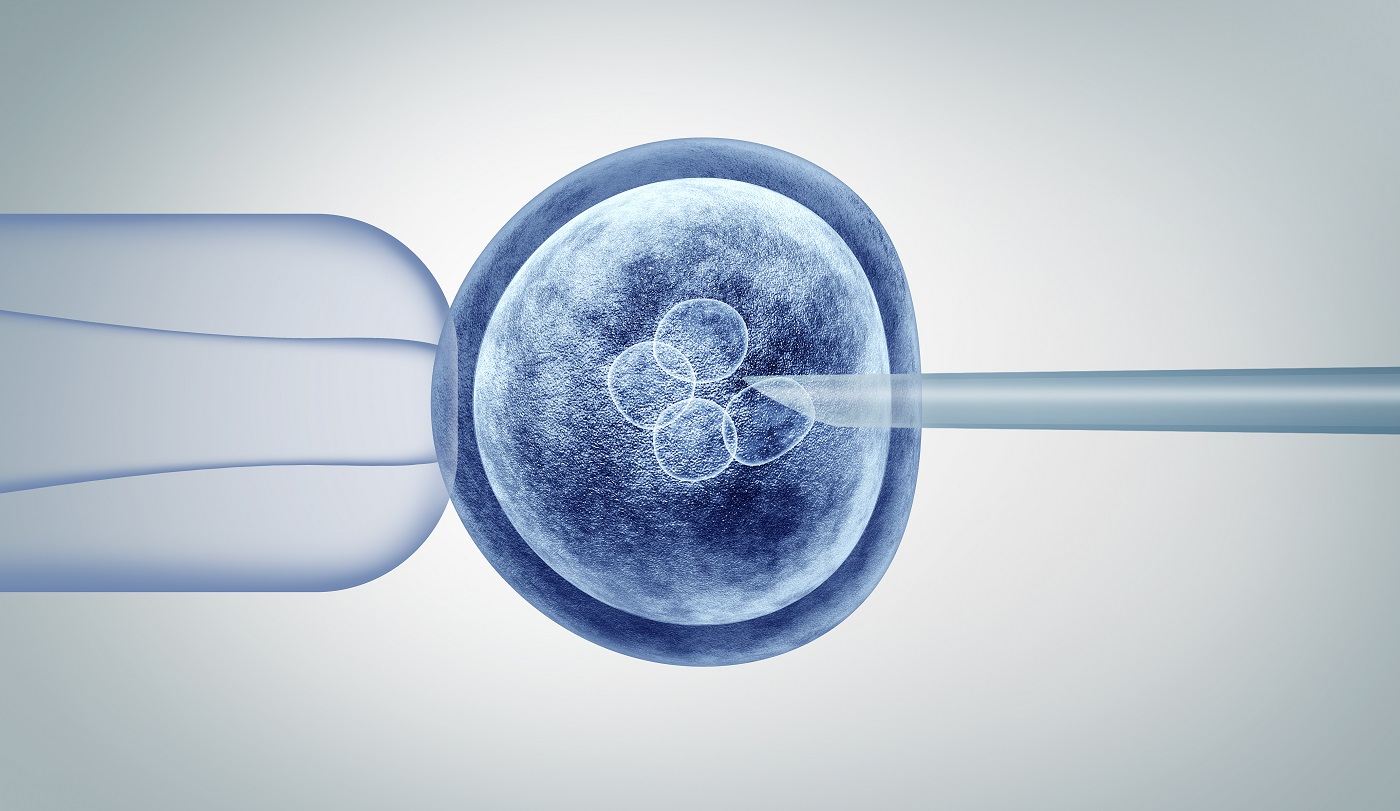
Today is the last day of this edition of the IVIRMA Congress. Among the different topics that will be addressed, we highlight one: reproductive genetics. Specifically, a most interesting question: Are we ready for non-invasive preimplantation genetic testing? In the words of the Professor Dagan wells, these have a promising future, providing numerous advantages, but still have significant limitations for their clinical use.
Reproductive genetics
The use, but above all, the precision of preimplantation genetic tests is being debated this afternoon on the last day of the 9th IVIRMA Congress. This discussion table will be moderated by the Dr. Nicolás Prados, director of IVI’s IVF laboratory. To discuss reproductive genetics and, specifically, to analyze the advantages, disadvantages and characteristics of preimplantation genetic tests, Drs. Dagan Wells and Carmen Rubio will participate in the debate.
Prof. Wells has spent nearly 30 years studying embryo genetic abnormalities and their early detection. He is currently a professor at the University of Oxford and directs Juno Genetics, a state-of-the-art clinical diagnostic laboratory, based in the same city. For her part, Dr. Rubio is currently Director of Embryo Genetics Research at Igenomix laboratories.
Efficacy of non-invasive preimplantation genetic tests
Regarding the use of this type of evidence, Prof. Wells argues that “They pose a very promising and revolutionary approach.” But he also warns that the results they offer are not as accurate compared to other more invasive methods, so they are not ready for use in clinics. “We must offer the best care to patients. For this reason, I consider that non-invasive tests are not reliable enough at the moment. They throw up too many false positives. That is, embryos classified as abnormal that do not present any genetic abnormality. Or cases of false negatives, in which the embryo does present some type of abnormality, but it is erroneously classified as if it did not have one “.
In the words of Prof. Wells, these errors are frequent among the results of non-invasive tests. That is why, on many occasions, it has to be completed with follow-up using invasive techniques. “This defeats the purpose of having done the invasive test in the first place.”adds Prof. Wells.
Detection of chromosomal abnormalities thanks to reproductive genetics
The use of preimplantation genetic tests is common in assisted reproduction treatments. These contribute to the assurance that the embryos selected for transfer do not present any type of chromosomal abnormality.
“The embryos obtained after in vitro fertilization may have a duplicated chromosome or they may be missing one, which we know as aneuploidy. If a chromosomally abnormal embryo -aneuploid- is transferred in a fertility treatment, in most cases it will not implant or it will end in abortion. Therefore, the advisable thing is the previous and precise detection of these chromosomal anomalies to avoid transferring these embryos “, argues Prof. Wells.
Are we ready for use in non-invasive test clinics?
Preimplantation genetic tests are traditionally performed using an invasive technique. This requires a qualification by professionals, as explained by Professor Dagan Wells. “They consist of the extraction of a small number of cells from the embryo, generally when it is about 5 days old. These are analyzed using advanced molecular methods. The problem is that this extraction of cells is a process that requires high specialization. It must be done by an embryologist with specific training, in addition to requiring expensive equipment. “
In this sense, not all laboratories have the required qualification, technology and equipment. This, in the words of Prof. Wells, provokes “bottleneck” that minimize patient access to this type of test, which also increases its cost. Contrary to this, non-invasive tests are performed without having to extract cells from the embryo. The analyzes are carried out on a small part of genetic material, which leaves the cells and passes into the environment in which the embryo is developing.
“Any risk to the embryo related to the extraction of cells would be eliminated. And the costs associated with the procedure would also be minimized, because the clinics would not have to have a specialized embryologist or expensive equipment “, analyzes Prof. Wells. For this reason, Wells himself concludes that these tests suppose a “Exciting possibility”, but he insists that greater precision in the results is needed, such as that offered by invasive tests. “I am convinced that the non-invasive test holds great promise for the future, but I don’t think it is ready at this time”, concludes.
Closing of the ninth edition of the IVIRMA Congress
With this interesting debate and other matters that make up this afternoon’s agenda, the ninth edition of the IVIRMA Congress will be concluded. This, which is held every two years, has been for the first time in an online format. This has allowed us to change the approach, so we have been able to enjoy talks, debates and Workshops, in addition to the traditional readings. Counting today, it has been five days full of science and life. More than 1,000 attendees from the five continents have been able to attend one of the leading Congresses in reproductive medicine, in which the most relevant issues for the future of this field are discussed.


